

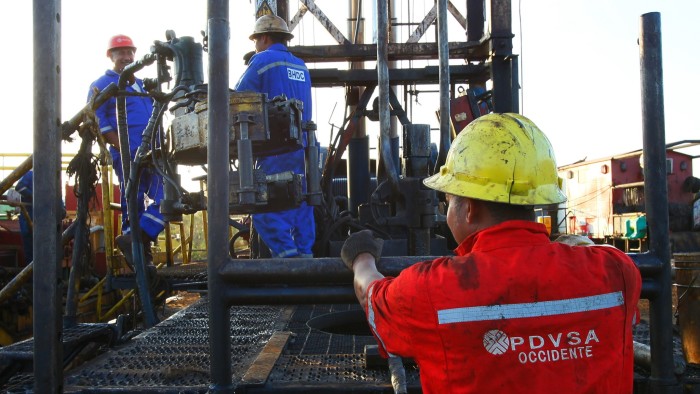
The Trump administration is taking decisive actions to increase economic and diplomatic pressure on Venezuelan President Nicolás Maduro by revoking several permits and licenses for Western oil companies operating in the country.
Italian energy giant Eni recently announced that it was informed by U.S. authorities that it can no longer accept repayments for the gas it produces in Venezuela through oil shipments from PDVSA, the Venezuelan state oil company. Eni expressed its intent to work with Washington to find a way to continue delivering gas supplies that are essential for the local populace while also receiving payment.
In a statement, Eni emphasized that it remains committed to adhering to international sanctions.
In addition, Global Oil Terminals, a company run by shipping magnate Harry Sargeant III, received a notice from the U.S. government requiring it to phase out its export licenses for products from Venezuela. Sargeant, a notable supporter of the Republican party, mentioned that the company must conclude its licenses by May 27 and ensure that all payments to Venezuelan entities are completed by this Wednesday.
Other companies, such as Spain’s Repsol, France’s Maurel & Prom, and India’s Reliance, which previously had waivers under the Biden administration, have not yet commented on the developments.
A spokesperson from the U.S. Treasury declined to provide any details, and the Venezuelan government has not responded to requests for comment.
These recent moves mark the latest efforts by the Trump administration to apply pressure on Maduro, who recently assumed a third term despite widespread allegations of election fraud. Last week, Trump announced plans to impose a 25% tariff on all imports from countries that buy oil from Venezuela, a decision that may impact crude markets and lead to higher costs on goods from nations like China and India.
This announcement caused Venezuela’s black market exchange rate to fluctuate significantly, rising from around 90 bolívars to the dollar on Monday to 102 by Friday, far exceeding the official exchange rate.
On his platform, Truth Social, Trump claimed that “Venezuela has purposefully and deceitfully sent to the United States, undercover, tens of thousands of high level, and other, criminals, many of whom are murderers and people of a very violent nature.”
Currently, over 7.7 million Venezuelans, nearly a quarter of the country’s population, have fled the country due to the ongoing repression and economic decline during Maduro’s time in office.
The actions against Eni and Global Oil Terminals follow the U.S. decision to revoke Chevron’s license to operate in Venezuela, despite the company’s extensive lobbying efforts to retain its position in the country.
Last year, Venezuela exported roughly 660,000 barrels of crude oil daily, a trade that remains vital for its economy. Analysts believe that these exemption licenses, which included those of Chevron and Eni, generated more than $4.5 billion for Maduro’s government last year, funds that opposition figures claim were used to sustain repression.