

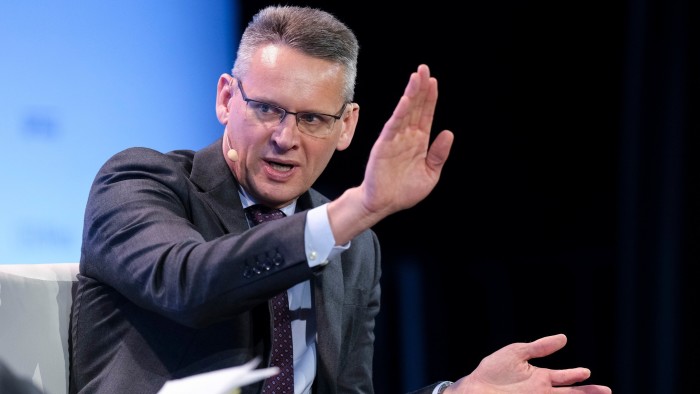
National Grid’s CEO, John Pettigrew, has reassured that the electricity transmission network was fully capable of supplying power to Heathrow during last week’s airport shutdown. The airport was closed for nearly 24 hours in response to a significant fire involving a substation.
After the incident on Thursday night, Pettigrew explained that while the North Hyde substation suffered severe damage, two other substations stayed operational throughout the event. He emphasized that all substations have the capacity to provide sufficient power to the airport.
Heathrow had to shut down most of its operations on Friday, leading to a major disruption that is projected to cost airlines between £60 million and £70 million. Over 1,300 flights were canceled, impacting countless passengers. The airport clarified that while they can operate with just two substations, they needed to adjust their internal power systems for safety reasons.
Heathrow’s CEO, Thomas Woldbye, noted the challenge of safely restarting thousands of airport systems, including baggage handling and air bridges. He hinted at a need for increased resilience in the airport’s infrastructure if the reliability of surrounding power sources cannot be assured.
Pettigrew reiterated that two substations were ready and available to supply power, placing the onus on Heathrow to explain the length of the shutdown. He acknowledged the uniqueness of losing a substation while assuring that resilience was still there given the functionality of other substations.
Despite these assurances, airlines questioned the duration of the airport’s closure and why some terminals could not open sooner. One executive expressed confusion about the decision to close the airport for an entire day when they believed flights could have resumed earlier in the day.
By Sunday, Heathrow reported that they successfully managed over 2,500 flights as they aligned with their airline partners to safely resume operations. Woldbye confirmed that they acted as quickly as possible given the circumstances, labeling the event as major and unprecedented.
In response to the incident, ministers have ordered an investigation. Chancellor Rachel Reeves pointed out that the disruption highlights the pressing need for additional airport capacity in London, including discussions around a third runway at Heathrow.
Airlines do not owe compensation directly to passengers but will bear the costs of hotel stays and related disruptions. Heathrow made it clear they will not be responsible for these costs. Nigel Wicking, representing airlines that use the airport, stated that they already pay a significant amount for services and shouldn’t shoulder the burden of failures in infrastructure resilience.
The fire at the North Hyde substation was particularly severe, damaging all three transformers on site due to a significant amount of cooling oil igniting. Pettigrew mentioned that investigations are still ongoing to determine the cause, with officials emphasizing it remains too hazardous for a thorough examination. While there is no current evidence of foul play, counterterrorism units are looking into the matter.
Pettigrew, reflecting on his extensive career, mentioned he had never seen a transformer fail like this before. He also noted the importance of security measures in light of global events, such as the conflict involving Russia, and stated that they continue to focus on protecting their assets.
In the face of a shifting energy landscape, with increased reliance on renewable sources, National Grid is investing heavily—£10 billion this year and a projected £35 billion over the next five years—to enhance network reliability and safety.