

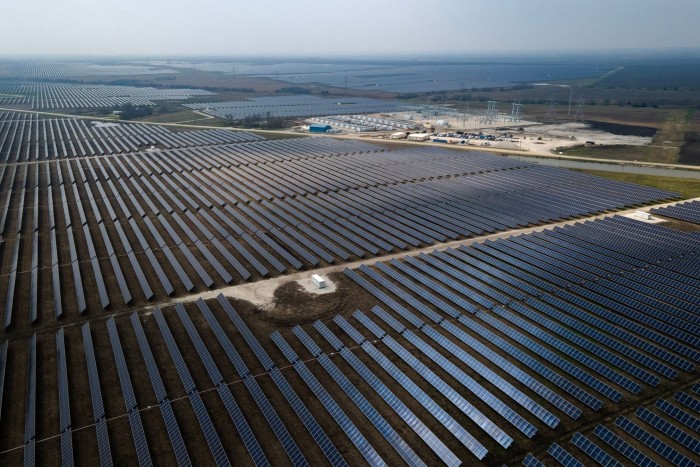
French energy company Engie has expressed concerns about shifting its investments from the United States to other countries unless it can get clear information on tariffs, tax incentives, and the plans related to Joe Biden’s Inflation Reduction Act. CEO Catherine MacGregor emphasized that understanding the investment rules is essential for making informed decisions.
She noted that Engie could reroute its investment resources globally in the short term if clarity doesn’t come soon from the US government. This situation arises following President Trump’s actions to freeze significant funding for clean energy on his first day in office, which is causing many energy companies to reconsider their investment plans in the US.
Other energy firms are also reconsidering their projects in light of these changes. Recently, Air Products, based in Pennsylvania, decided to halt a hydrogen project in New York and a sustainable aviation fuel initiative in California.
In recent updates, TotalEnergies CEO Patrick Pouyanné announced that their major offshore wind project would be “on pause” for the duration of Trump’s presidency, citing the increased risks stemming from the political landscape. Similarly, German energy company RWE has scaled back its US wind investments due to the uncertain climate following the election.
In contrast, Iberdrola from Spain expressed confidence that Trump’s tariffs would not negatively impact their operations, primarily because they source many materials domestically.
Engie’s MacGregor previously acknowledged the Biden administration’s support for renewable energy through the Inflation Reduction Act, which has benefited their wind, solar, and battery storage projects. However, the current freeze on IRA spending, halting offshore wind project approvals, and potential tariffs pose significant threats to the interconnected supply chains within the energy sector.
MacGregor reiterated the necessity for “clarity” regarding the future of the IRA and tariffs affecting key suppliers to ensure continued investment. Despite making only a small fraction of its earnings—2%—from North America in 2024, Engie remains optimistic about its business prospects, particularly in Europe, where renewable energy earnings represent 16% of total profits.
Amid the current challenges, Engie has set a goal to reach 95GW of installed renewable and battery storage capacity by 2030, highlighting their commitment to growth despite the political uncertainty. The renewables industry is warning that the policy shifts under Trump’s administration could disrupt the burgeoning US clean energy sector, which has attracted over $500 billion in investment since the IRA was established in 2022.
Democrats have contested Trump’s funding freeze, leading to several federal court rulings that temporarily lifted the pause. However, the ultimate fate of the Inflation Reduction Act rests with Republican lawmakers, who would have to unite to support any efforts to scale back or repeal the legislation.
Engie reported a 2024 revenue of €73.8 billion, down 10.6% from 2023, but its earnings increased by 4% to reach €15.6 billion. Shares of Engie rose by 6% in early trading, signaling some resilience despite the challenges. Similarly, Iberdrola has reported strong financial performance, indicating that their focus on power grids—sector less affected by federal policies—might help them weather the changes in renewable energy policies.