

The UK’s security agencies are currently reviewing China’s increasing influence in the UK energy sector. This investigation is driven by worries about the potential threats Chinese investments could pose to key national infrastructures, especially with China’s involvement in essential technologies like solar panels and industrial batteries.
According to insiders, MI5 is working to determine the risks associated with using Chinese technology in Britain’s energy supply. These concerns have arisen as the UK moves to adopt more sustainable energy sources and reduce reliance on fossil fuels. Officials in Whitehall are particularly anxious about the possible exchange of sensitive data with the Chinese government and the prospect of China gaining control over critical energy assets.
This inquiry is part of a larger assessment of UK-China relations, scheduled to conclude later this year. An official noted, “The spooks are looking into this,” indicating that it relates to questions about where the UK sources its energy technology and the associated security risks.
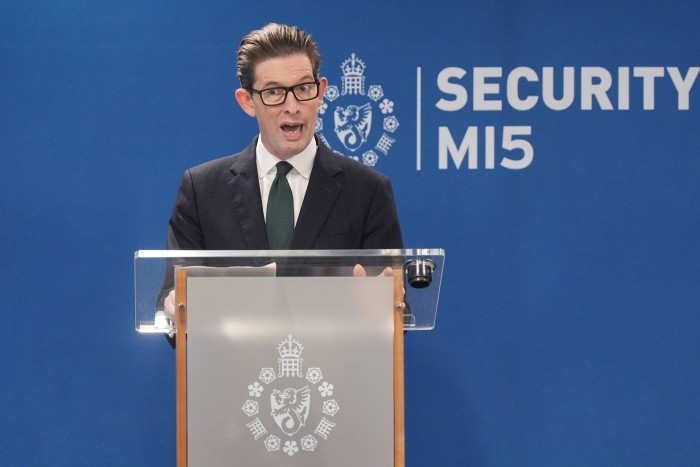
MI5’s director-general, Ken McCallum, highlighted that the “National Protective Security Authority,” a division focused on technical threats, has long maintained an interest in supply chain security. Recently, members of Parliament debated plans for the Chinese company Mingyang to supply wind turbines for an offshore wind project in Scotland, named Green Volt.
Despite Mingyang being a privately owned firm, uncertainties remain about potential Chinese interference in corporate choices. Energy Minister Kerry McCarthy assured the House of Commons that rigorous processes are in place to evaluate China’s role in the UK’s critical infrastructure supply chain, and national security considerations are being prioritized.
Concerns were voiced by Shadow Energy Secretary Andrew Bowie, who labeled the prospect of using Chinese turbines in UK wind farms as “unthinkable” due to security concerns. He emphasized that employing Chinese technology could lead to vulnerabilities in critical operations.
The Ministry of Defence has also alerted policymakers that the Green Volt project might be susceptible to espionage through sensors that could monitor British waters and military activities.
The UK government’s “China audit” is led by the Foreign, Commonwealth and Development Office, with various departments contributing. Although the UK aims to maintain a functional economic relationship with China, it also intends to safeguard national security.
Recent engagement with China has increased, with Labour representatives visiting the country. However, the government has also used the National Security and Investment Act to enforce a Chinese investment exit from a UK semiconductor firm.
Developers of the Green Volt project, companies Vargronn from Norway-Italy and Japan’s Flotation Energy, have asserted that Mingyang has not yet been selected as a turbine supplier. Green Volt emphasized that they are currently assessing potential partners and would adhere to government guidelines regarding critical national infrastructure security.
Mingyang has expressed a willingness to establish a turbine manufacturing plant in Scotland should it be chosen, and the Treasury is reportedly in favor of this initiative. With ambitious targets set for decarbonizing the UK’s power supply by 2030, Musk’s suggestions are accompanied by fears about the control systems of wind turbines.
Bowie expressed concern over the government’s potential willingness to approve Mingyang, warning of the risks embedded in Chinese technology within Britain’s energy landscape.
As the government promises to conduct thorough investigations into Chinese investments, officials acknowledge that cutting down China’s role in Britain’s renewable supply chains poses significant challenges, given China’s sheer dominance in the battery and solar panel markets.
Observers note that the situation with the renewables market mirrors previous challenges, akin to the U.K.’s decision to exclude Huawei from its 5G network due to security issues. There is a prevalent concern regarding dependency on Chinese supplies in renewable energy.