

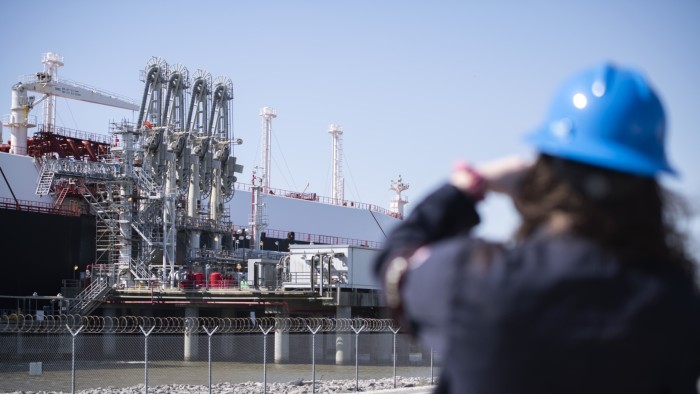
Tankers transporting liquefied natural gas (LNG) are shifting their routes in the Atlantic and heading towards Europe. This change comes as cargo owners seek to capitalize on the gas market, which has been significantly impacted by reduced Russian gas supplies via Ukraine.
According to data from commodities firm ICIS, at least seven LNG shipments departing from the United States have abruptly changed their course this month. Initially, six ships were on their way to the Cape of Good Hope and Asia, while another was heading towards Colombia. However, all have now redirected to European ports.
Alex Froley, an LNG market analyst at ICIS, noted that these sudden changes are unusual and reflect the ongoing adjustments in Europe’s gas supply landscape, which has been altered by the nearly three-year conflict in Ukraine. Earlier this month, Russia ceased gas flows through Ukraine, and Europe is now facing challenges as colder weather quickly depletes gas storage, the fastest rate since the energy crisis in 2022.
European gas prices remain high, partly due to the expiration of the Ukraine transit deal during a peak demand season. Earlier this week, TTF futures, a regional benchmark for gas pricing, approached €50, nearing their highest levels since October 2023.
The rise in prices is creating better profit margins for companies and traders, compared to sending LNG shipments to Asia, where demand is waning and prices are lower. According to Spark Commodities, sending U.S. LNG to Europe in January could yield profits of up to $5.3 million more per shipment.
These diversions in shipping routes are largely driven by the limited profitability of sending cargoes to northeast Asia, as highlighted by analyst Qasim Afghan from Spark Commodities. The diverted vessels are transporting approximately 500,000 tonnes of LNG, roughly 0.5% of the total LNG that Europe imported last year.
Traders have options when it comes to redirecting shipments: they can either pay a penalty to cancel a delivery or send an alternative cargo to the original destination. In some situations, cargoes do not have final destinations set at the loading port and can reevaluate their path while en route.
Two of the diverted shipments are now making their way to Turkey, according to ICIS. This rerouting allows import terminals in Turkey and Greece to convert the LNG back into gas, which can then be piped into southeastern Europe—a region particularly affected by the end of Ukrainian gas transit.
The reliance on LNG imports is becoming more critical for Europe as Ukrainian transit losses continue and storage levels dwindle. According to Gas Infrastructure Europe, the EU’s gas storage was reported to be 59% full as of Monday, which is 15% lower than the same period last year, with colder weather contributing to faster withdrawals.
This week, the International Energy Agency (IEA) predicted that the reduction in Russian gas supplies will likely lead to a 15% rise in Europe’s LNG imports. The IEA emphasized that while the cessation of Russian gas flows through Ukraine is not an immediate security threat for the EU, it could heighten LNG import demands and tighten market conditions by 2025.
If storage levels drop significantly over winter, Europe may face elevated gas prices in summer as it seeks to replenish supplies. Energy Aspects, a consultancy, anticipates that by the end of March, European gas inventories could fall to 38 billion cubic meters, which is about 35% of total storage capacity. They also project that approximately 35% of summer restocking supplies will rely on LNG.
James Waddell, head of European gas and global LNG at Energy Aspects, warned that any substantial disruption to global LNG supplies or delays in ramping up new export facilities in the U.S., alongside increasing demand in Asia, could jeopardize recovery efforts for storages.