

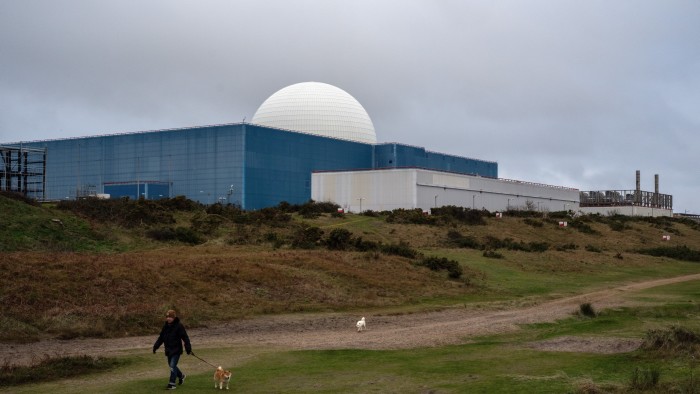
France’s state auditor has advised the French nuclear firm EDF to hold off on making a final investment choice regarding the Sizewell C reactor in the UK until it has minimized its financial risk in another project, Hinkley Point C. The Cour des comptes emphasized the importance of ensuring that any international projects bring in profits and urged EDF to continue with new nuclear projects in France without delays.
These remarks arrived just hours after reports indicated that the costs for the Sizewell C project in Suffolk could soar to £40 billion, which is double the earlier estimates from 2020. This spike in estimates is attributed to rising construction costs and issues faced at Hinkley Point in Somerset.
A delay in EDF’s final investment decision could further hinder the Sizewell C project and potentially lead to even higher expenses. Both the UK government and EDF are working to attract significant investment for Sizewell C, with the final decision now pushed back to at least spring.
In response to the rising costs, the Cour des comptes acknowledged that the increase seemed reasonable considering similar projects’ cost overruns. They also suggested that any decisions regarding EPR2 projects, the same technology as Hinkley Point C, should wait until financing is secured and in-depth assessments are complete. This could mean a more cautious stance from EDF regarding six additional EPR2 reactors in France, estimated to cost nearly €80 billion.
The Cour des comptes criticized the long-delayed Flamanville project in northern France, which has just begun generating electricity, but is significantly behind schedule—12 years late. The president of the auditors, Pierre Moscovici, expressed concerns about the project’s profitability, implying that EDF may never recoup its capital investment.
Amid these developments, France has committed to constructing six additional reactors in the coming decades to address its energy requirements, a goal that some critics believe may be overly ambitious.
In the UK, uncertainties surrounding the Sizewell C project raise concerns about the government’s nuclear energy strategy, which aims to ensure a steady energy supply as the country increases its reliance on renewable energy. Hinkley Point C, initially slated for completion in 2017, has seen its timeline extended to 2025, with completion now expected no earlier than 2029 and costs escalating to around £46 billion. EDF explained that the project delays stem from the complexities associated with its construction.
For the Sizewell C project, EDF plans to invest less compared to its stake in Hinkley Point C, aiming for a share of under 20%.