

The Biden administration has recently eased the rules that green hydrogen producers must meet to receive tax credits. This adjustment was made in an effort to support the struggling sector and bolster the administration’s commitment to clean energy initiatives before Donald Trump potentially takes office again.
The Treasury Department has pushed back the introduction of more stringent requirements from 2028 to 2030. Starting in 2030, green hydrogen developers will have to demonstrate that their production is powered by renewable energy on an hourly basis, rather than providing an annual account. This new timeline is in line with the European Union’s goals, as the U.S. aims to position itself as a leader in clean hydrogen exports.
Additionally, hydrogen that is produced using energy from existing nuclear plants can now qualify for these tax credits, provided that it helps avoid the retirement of those nuclear facilities. This is a shift from previous guidelines that insisted on new renewable energy projects, such as solar or wind, for green hydrogen production.
John Podesta, a senior climate advisor to President Biden, stated that these extensive revisions give hydrogen producers the stability they need to advance their projects, ultimately aiming to establish the U.S. as a global leader in green hydrogen.
The Inflation Reduction Act, a key climate policy of the Biden administration, included a $3-per-kilogram tax credit for hydrogen production, helping to attract investment in this area. Green hydrogen, generated from renewable energy, can serve as a cleaner alternative for heavy industries like shipping and transportation.
However, some environmental groups are cautioning that without strict regulations, hydrogen production might still rely on fossil fuels, which would negate efforts to reduce emissions.
Concerns regarding the demand for hydrogen, coupled with uncertainty around the tax credit rules and political threats from Trump, have shaken confidence within the clean hydrogen sector. This has led to a downturn in stock prices and has caused several developers to halt projects.
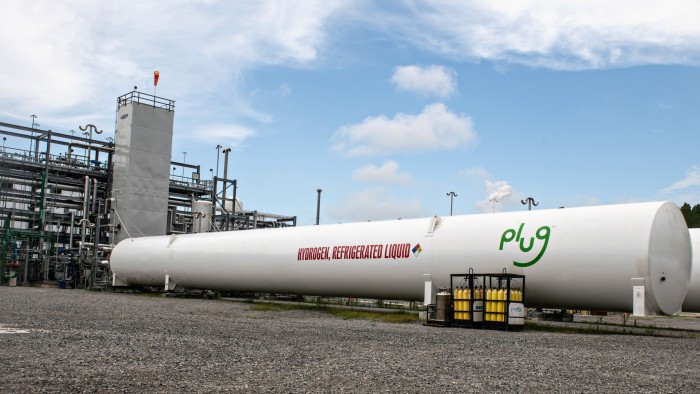
For instance, in October, Plug Power announced that it had paused its $290 million green hydrogen project in New York, which was expected to be the largest in North America. Other companies, including Marathon Petroleum, Fortescue, and CNX, have similarly pulled back from commitments to the Biden administration’s hydrogen hubs program.
Aaron Bergman, a fellow at the non-profit Resources for the Future, pointed out that while tax credits can help reduce the cost of hydrogen production, there needs to be enough market demand for it to be viable. A recent analysis from BloombergNEF indicated that only 6% of hydrogen projects in the U.S. had secured binding agreements for supply.