

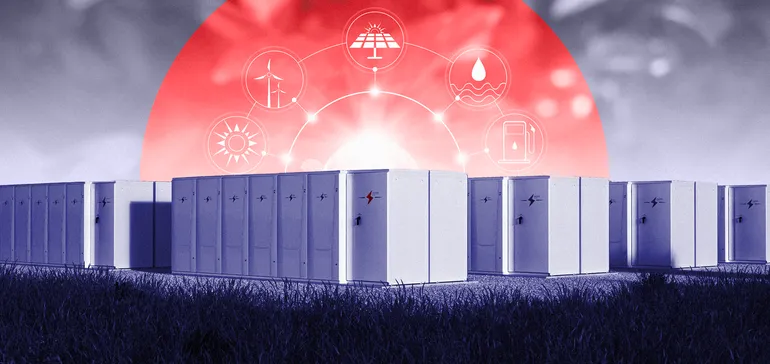
Two New York utilities have launched a significant initiative to source at least 310 megawatts (MW) of utility-scale energy storage resources. This goal aims for connections to the state grid by 2030 and involves contracts that could last up to 15 years.
The Consolidated Edison Co. of New York and Orange & Rockland Utilities are spearheading this joint solicitation. They are interested in systems capable of discharging power for a minimum of four hours, which must be fully located within their service areas. This move is part of a 2022 directive from the New York State Public Service Commission (PSC), mandating Con Edison to acquire 300 MW and O&R to pursue at least 10 MW of energy storage by 2030.
With this solicitation, New York is advancing toward its target of installing 6 gigawatts (GW) of energy storage by 2030. Governor Kathy Hochul announced this ambitious plan in early 2022, doubling the state’s earlier goal of 3 GW. The roadmap includes 3 GW of new utility-scale storage, 1.5 GW of retail storage, and 200 MW dedicated to residential solutions, contributing to the roughly 1.3 GW of energy storage already available in New York by mid-2024.
Con Edison and O&R are among several utilities in New York, including Central Hudson Gas & Electric, which are responding to the PSC order with their own requests for proposals (RFPs).
The solicitation invites bids from projects or coordinated portfolios with over 5 MW of dispatchable capacity. Each portfolio may consist of up to 10 projects that each produce at least 2 MW of dispatchable power. All projects must be in the same New York Independent System Operator zone and have synchronized commercial operation timelines and contract terms.
According to Allan Drury, a spokesperson for Con Edison, the unique challenges faced in downstate New York, such as regulatory approvals and site selection, can be addressed by enabling smaller distribution-connected projects. This approach could encourage development and create potential cost efficiencies.
Con Edison might prioritize contracts for projects aiming to begin operations by specific service dates in designated “preferred locations,” which include various networks across New York and have distinct operational deadlines stretching from 2027 to 2030.
Although O&R did not specify preferred project locations in its area, all submissions will adhere to the same guidelines. The minimum four-hour discharge duration set in the RFP is to encourage the development of longer-duration battery systems that can remain economically viable against other options.
The two utilities aim to inform successful applicants by July 31, 2025, with contracts to be established by year-end. Depending on the competitiveness of the proposals, the total capacity of selected projects might even exceed the PSC’s established storage targets.