

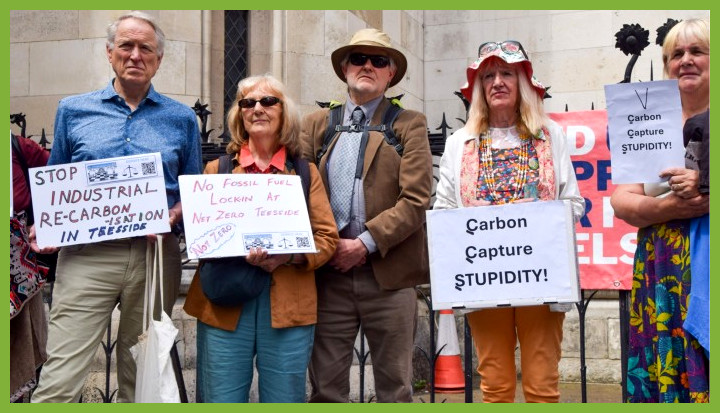
The UK government has decided to provide financial support to the developers of an £8 billion gas-fired power station and carbon capture project. This financial backing comes as the project faces potential legal challenges from environmental activists.
If the project, located in north-east England, is halted by court proceedings, the Department for Energy Security and Net Zero has pledged to compensate the companies involved. If planning permissions are revoked due to these challenges, the compensation could potentially reach billions of pounds, according to estimates.
The power station in Teesside is a joint venture between BP and Equinor, with TotalEnergies having a minority stake in the corresponding pipelines and storage facility planned beneath the North Sea. A new fund from the National Wealth Fund could also help cover expenses during legal disputes, ensuring the project continues while developers assess their options.
Legal challenges have increasingly become a major concern for energy developers in the UK. These agreements, seen through investigative journalism, highlight the complexities of launching significant infrastructure projects amidst ongoing legal scrutiny.
The project, known as Net Zero Teesside Power, aims to establish a carbon capture and storage system, intended to significantly reduce carbon emissions. The developers plan to power over one million homes and aim to capture about 2 million tons of carbon dioxide annually by 2028.
While Labour’s government has committed substantial resources to support carbon capture technology, some environmentalists have expressed concerns. Critics argue that this technology might prolong the use of fossil fuels without fully addressing emissions and could divert investments needed for renewable energy sources.
Despite these challenges, the Teesside initiative represents a significant step in the government’s efforts to transition the UK to cleaner energy by 2030. Plans to streamline legal processes for major infrastructure projects are also being considered to prevent delays in development.
Ed Miliband, the energy secretary, has emphasized the project’s importance, asserting it reflects the government’s goals of evolving the UK into a clean energy leader. The planning permissions had originally been granted by the previous government but are now under legal scrutiny from campaigners concerned about its environmental impact.
As legal proceedings continue, the future of the Teesside project remains uncertain, with a scheduled appeal hearing next March.