

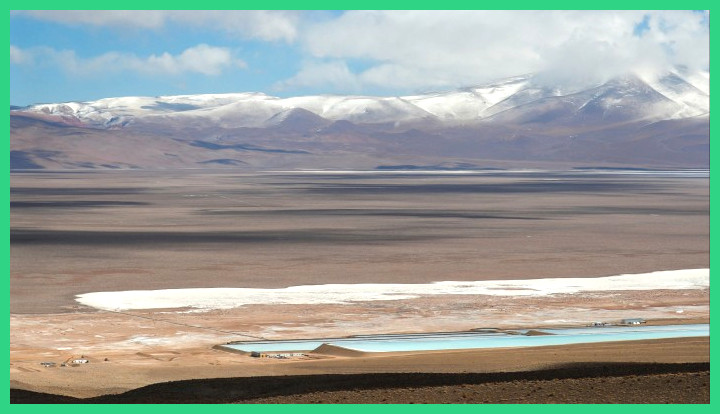
Anglo-Australian mining company Rio Tinto is launching a major investment plan, committing $2.5 billion to establish its first large-scale lithium production facility in Rincon, Argentina. This decision comes shortly after the company finalized a $6.7 billion agreement to purchase lithium producer Arcadium.
Despite a significant decline in lithium prices—down around 30% this year due to an oversupply in the market—Rio Tinto remains optimistic about the future of lithium. They see it as a crucial component for electric vehicle batteries. CEO Jakob Stausholm highlighted that their investment strategy is “countercyclical,” suggesting that they expect to maintain profitability due to the relatively low production costs at Rincon, even if lithium prices remain low.
“We are positioning ourselves to become one of the top lithium producers,” Stausholm stated. He emphasized that the upcoming investments and the Arcadium acquisition would be vital for Rio’s long-term strategy, ensuring lithium remains a significant part of their portfolio for decades.
Unlike many of its competitors, such as BHP and Anglo American, Rio Tinto is making substantial moves into the lithium market. While lithium is a common element, its processing is not straightforward; it requires substantial investment in facilities to produce battery-grade lithium carbonate.
Currently, China dominates global lithium carbonate production, generating about two-thirds of the total supply, which raises concerns for the US and Europe about having reliable access to lithium outside of China.
Rio’s Rincon project is designed to extract lithium from brines pumped from the earth, with plans to develop a commercial-scale facility capable of producing 60,000 tonnes of high-quality lithium annually by the year 2031. Construction is set to begin next year. The company had purchased the Rincon project for $825 million in 2022, with initial lithium production kicking off last week and battery-grade production anticipated next year.
Stausholm noted that while no formal agreements with buyers have been established yet, there has been considerable interest from automakers in the plant’s output.
However, the global lithium market is facing challenges, primarily due to slower-than-expected growth in electric vehicle sales. For instance, leading Chinese battery maker CATL has recently reduced production at its major mine in Jiangxi province. Additionally, Albemarle, the largest lithium producer worldwide, reported a $1.1 billion loss in the last quarter due to falling prices and has halted its plans for a new lithium refinery in South Carolina.
Rio’s decision to acquire Arcadium is crucial, and the all-cash offer will be presented to Arcadium shareholders on December 23. If approved, this acquisition would solidify Rio Tinto’s position among the world’s largest lithium producers.