

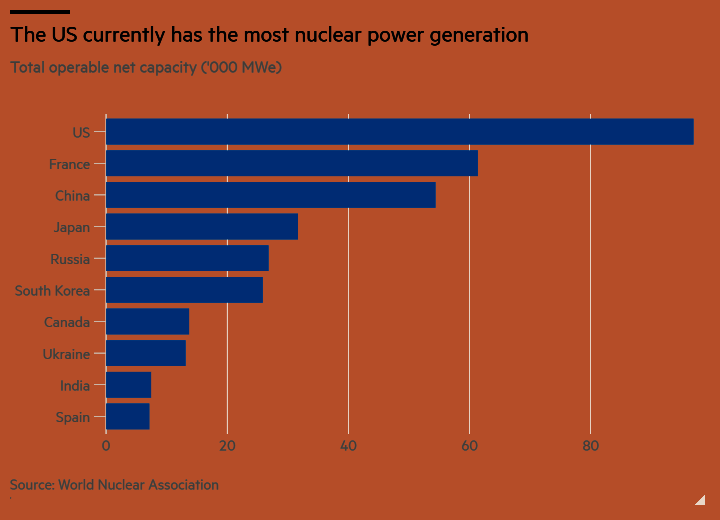
Western nations have had a complex relationship with nuclear energy over the years. However, there seems to be a renewed interest in atomic power in countries like the Czech Republic, Sweden, the United States, and the United Kingdom, which is now also inspiring private sector involvement.
Recently, 14 major banks and financial institutions committed to increasing their backing for nuclear energy. Additionally, Microsoft has entered into a 20-year power supply agreement with Constellation Energy, which could lead to the reopening of a U.S. nuclear power plant that closed in 2019.
While the banks’ vague commitments may raise questions, support from institutions like Morgan Stanley and Goldman Sachs is a positive step, although specifics are still unclear. Historically, financing has been a major hurdle for expanding nuclear projects in the West. However, meaningful action will likely require governmental involvement in funding nuclear energy initiatives.
Financing nuclear power projects traditionally encounters significant challenges due to high upfront costs and extended construction timelines. If a project’s funding organization fails, an unfinished nuclear facility often has limited security value—a concerning factor for lenders. Due to these risks, the costs of borrowing could become prohibitive, making such projects impractical, according to Jens Weibezahn, an assistant professor at the Copenhagen Business School.
Confidence issues have also arisen from projects like EDF’s Hinkley Point C in the U.K., where initial budget estimates of £18 billion have escalated to as much as £47 billion in today’s money.
To tackle these issues, Sweden’s energy minister, Ebba Busch, recently mentioned exploring risk-sharing arrangements. Several countries are considering innovative financing models, like a regulated asset base, which allows consumers to contribute to the costs of nuclear projects before they become operational.
Microsoft’s agreement highlights an emerging role for the private sector in reviving nuclear energy. Still, it’s important to note that this agreement is not tied to any new nuclear construction.
In the past, many large lenders have shown interest in funding new nuclear projects but chose to withdraw due to perceived risks. New financial models are rekindling their interest, but it remains to be seen who will ultimately bear the risks, according to Simon Virley from KPMG.
A major concern is that if the financial burdens fall too heavily on taxpayers or consumers, public sentiment may turn against nuclear projects. Previous experiences demonstrate that rising costs and safety worries can swiftly alter public opinion and halt progress.