

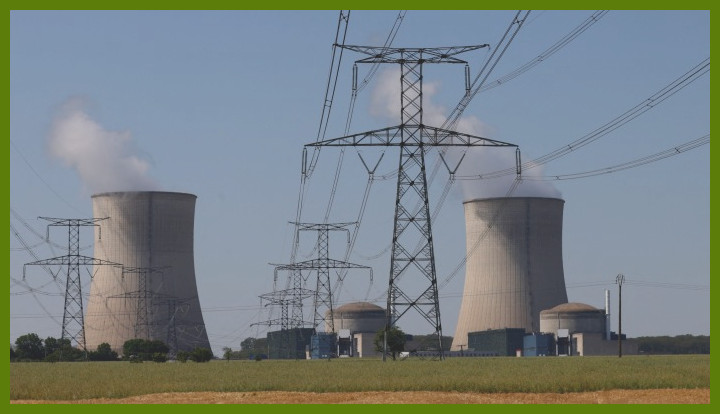
EU ministers have recently shown their backing for nuclear energy as part of their plan for the upcoming UN climate summit, marking a significant step for nuclear power as a viable energy source across Europe. This development follows prolonged discussions that highlighted differences between France and Germany regarding the EU’s approach for the COP29 meeting.
Despite the debates, EU nations eventually agreed on the need to promote “low-emissions technologies,” aligning with an earlier agreement made at last year’s COP28 summit which acknowledged nuclear energy’s role. This change signifies a notable shift in perspective towards nuclear power in Europe, especially after the negative sentiments that arose post the Fukushima disaster in 2011.
A coalition of mostly Eastern European nations and France is set to release a paper emphasizing the essential contribution of nuclear energy to the EU’s energy strategy, insisting that it should be appropriately recognized in upcoming regulatory proposals.
Moreover, at a recent meeting, Dutch and French officials formalized an agreement to enhance collaboration on nuclear energy initiatives, aiming to bolster support for nuclear power.
However, some member countries, such as Germany, Austria, and Denmark, express concern that highlighting nuclear energy could potentially divert funding away from renewable resources, which they view as more economical and cleaner options to mitigate climate change.
Austrian Climate Minister Leonore Gewessler stated, “We see nuclear has been kept alive by huge amounts of public money without a feasible business model, while renewable expenses have decreased dramatically.” She advocates for prioritizing funding towards renewable solutions.
The agreed statement late Monday lays out the EU’s negotiation guidelines for the forthcoming UN climate summit in Baku, Azerbaijan, establishing the EU’s ambition in climate discussions.
Participants in the talks indicated that the ongoing nuclear debate has taken the focus away from broader energy challenges and the EU’s commitments to international climate funds. Linda Kachler, director of a Brussels-based think tank, noted that the discussions have become more about preferences for specific technologies rather than addressing how quickly the EU can reduce fossil fuel dependencies, particularly from Russia.
An EU negotiator remarked that stances on nuclear energy have taken on a ‘religious’ tone, with crucial issues about funding for nations most impacted by climate change being overlooked.
The summit, labeled the “finance COP,” is crucial for setting new climate finance targets for the most vulnerable areas. Under the 2015 Paris agreement, almost 200 nations need to finalize a new financing pledge by next year, positioning COP29 as a critical opportunity for resolution.
Discrepancies remain regarding the amount of funding needed, with developing nations requesting approximately $1 trillion to $1.3 trillion. Conversely, developed nations, including members of the EU, are wary of increasing public funding without a clear framework to boost private investments.
Calls have been made to expand the list of donor countries to include economically strong nations like China and Singapore, which still qualify as “developing” under the outdated UN classifications.
Irish Climate Minister Eamon Ryan anticipates that the negotiations in Baku will be the most challenging since the Paris agreement because funding is such a contentious issue. EU ministers, including Ryan and French Climate Minister Agnès Pannier-Runacher, propose establishing structures like a capital markets union in Africa to support financing for renewable energy initiatives.
Wopke Hoekstra, the EU’s climate commissioner, reported positive discussions on financing strategies, focusing on increasing available resources and ensuring funds reach those most in need, while also encouraging all financially capable countries to contribute.
Finnish Climate Minister Kai Mykkänen expressed optimism for a change in how countries are categorized economically, emphasizing that nations like Singapore should not remain classified as developing, especially when their financial standing surpasses that of many EU states.