

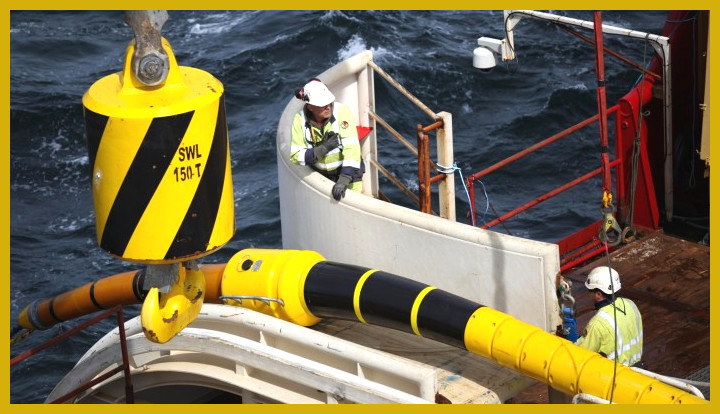
The UK government has given the green light for five new electricity interconnector cables that will link to Ireland and continental Europe. These projects, costing around £7 billion, are aimed at enhancing the electricity grid, especially as renewable energy sources grow in importance.
The energy regulator, Ofgem, has stated that these developments will likely lead to a slight annual increase in electricity bills, estimated at between £2 and £5 from 2030 to 2055. The initiative is expected to bolster the North Sea wind industry and provide power to millions of households.
Two of the interconnectors will directly connect the UK to wind farms in Belgium and the Netherlands. The other three will link England with Germany, Wales with Ireland, and Scotland with Northern Ireland. Collectively, these projects are expected to deliver just over 6 gigawatts (GW) of capacity and are planned to be operational by 2032. This will raise the UK’s total interconnector capacity to 18 GW, as per Ofgem’s report.
Linking electricity grids across Europe will help to maintain balance despite the fluctuating nature of renewable energy. The new cables will enable the UK to sell surplus electricity during windy weather and import electricity when the generation from renewables drops.
Currently, the UK operates nine interconnector cables, with two additional ones under construction. Reports show that in the second quarter of this year, around 13% of the UK’s electricity supply came from imports through these interconnectors. The UK also experienced a record import of 12.1 terawatt-hours (TWh) of electricity during this period, marking a 31% increase from the previous year. Additionally, the UK exported 2.9 TWh, reflecting a significant 75% rise annually. Ofgem believes that by the 2030s, the UK will become a net exporter of electricity as more wind generation capacity comes online.
Akshay Kaul, Ofgem’s head of infrastructure, remarked that these new connections are critical as the country transitions to cleaner energy, making the most of the North Sea’s wind potential. He emphasized that this infrastructure would contribute to a more affordable energy supply, reducing reliance on fluctuating foreign gas markets.
The projects approved by Ofgem include the £2.4 billion Tarchon line to Germany, the €860 million MaresConnect initiative, and the £700 million LirlC project, among others, including two connections to wind farms in the Netherlands and Belgium being developed by National Grid.
Ofgem noted that typically, the process from planning to operation for interconnectors takes between six to ten years, with construction spanning three to five years. However, some recent undertakings have faced delays due to high demand for cables and associated infrastructure.
In response to these challenges, the UK has implemented a cap-and-floor mechanism to ensure that developers receive a minimum return on their investments while also capping potential profits over a 25-year period.