

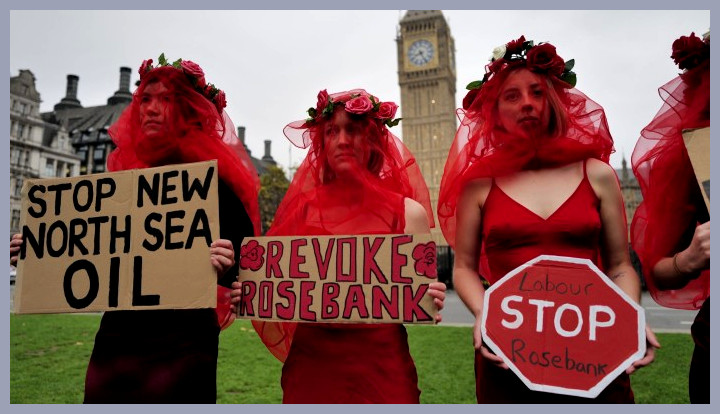
Three oil and gas companies are expected to acknowledge that the UK government made a mistake in granting them licenses for two significant offshore projects. This acknowledgment comes just before an important court case that could impact future fossil fuel developments.
The companies in question—Shell, Ithaca, and Norway’s Equinor—plan to argue that they should still be permitted to move forward with their projects: Rosebank in the North Atlantic and Jackdaw in the North Sea.
Documents obtained reveal that Greenpeace and Uplift, two environmental groups, have brought judicial reviews against the government regarding these licenses. They claim that the environmental assessments conducted only looked at emissions from extraction, neglecting the emissions produced when the fuels are burned.
This critical hearing will begin on Tuesday at the Court of Session in Edinburgh and is anticipated to last four days. In August, the UK government decided not to contest the reviews, leaving the oil companies to defend their case.
Rosebank, located 80 miles northwest of the Shetland Islands, is a project led by Equinor and Ithaca, which aims to invest around $3.8 billion in its initial phase. Meanwhile, Shell is developing Jackdaw, which focuses on producing natural gas condensate—a very light liquid hydrocarbon.
These challenges come on the heels of a UK Supreme Court ruling that stated environmental impact assessments for oil and gas production must take into account the emissions from burning the products. The current cases are being closely monitored for how this ruling will affect offshore projects.
Shell is anticipated to admit that the approval for the Jackdaw project in 2022 was unlawful. Equinor is likely to agree that it was a mistake for the government to overlook the end-use emissions when approving Rosebank in 2023. Ithaca is expected to recognize it cannot defend the original approval process.
Despite this, the companies will argue that the assessments were carried out in good faith, based on the law as it was understood prior to the Finch ruling. They will request minimal or no actions to rectify the error, citing existing contracts and potential economic repercussions from any changes.
Shell stated that the Jackdaw project was developed in accordance with all necessary permits and consents. “We accept the Supreme Court’s ruling in the Finch case, but our position is that Jackdaw is a vital project for UK energy security and the project is already well advanced,” a Shell representative mentioned.
Equinor declined to comment on the court case but expressed their intent to continue collaborating with relevant parties regarding the Rosebank project.
The court has various options, such as ordering the government to reassess their decisions or scaling down the projects rather than halting them entirely. A decision from the court is expected to take several weeks.
Philip Evans, a senior campaigner at Greenpeace UK, accused the oil companies of trying to mislead the public and urged them to discontinue these “reckless and unlawful” developments.