

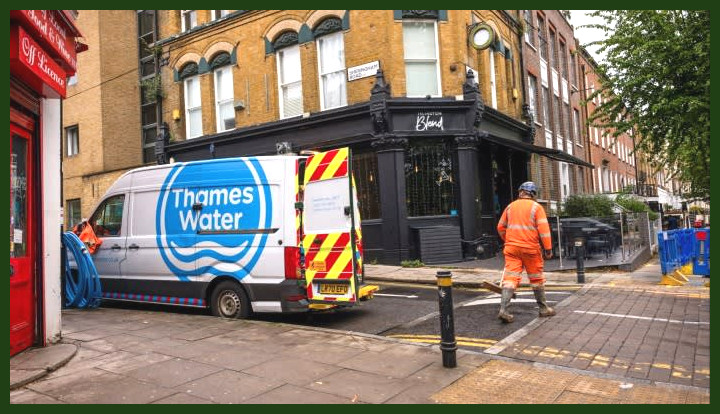
In a saga intertwining politics and finance, a water company, co-founded by a pivotal Conservative party figure—its treasurer no less—stands at the precipice of a significant investment in Thames Water. This utility giant, grappling with an urgent imperative to secure billions to stave off a looming threat of renationalization, finds itself navigating a tumultuous financial landscape.
Castle Water, the very entity that acquired Thames Water’s corporate clientele back in 2017, is contemplating an infusion of fresh equity, a move intended to fortify the balance sheet of the UK’s largest water supplier. Insiders whisper that Castle Water aspires to seize a controlling interest in the beleaguered utility, which serves a staggering 16 million customers across the London area.
At the helm of this water company is Graham Edwards, a benefactor of the Conservative party who has generously contributed millions to its coffers. As a co-founder, director, and shareholder of Castle Water, his influence looms large in the ongoing negotiations. Recently, Castle Water formalized its intent by signing a non-disclosure agreement, thereby gaining access to Thames Water’s private financial data for thorough scrutiny.
The ambitious blueprint laid out by Castle Water envisions a public listing of Thames Water’s shares within a mere two to three years—a strategic maneuver aimed at injecting much-needed transparency akin to that afforded to publicly-traded water entities. Sources close to the discussions indicate that funding is already secured for this capital increase, alongside plans to introduce enhanced management expertise, essential for orchestrating a turnaround of the distressed utility.
While the precise size of the stake under consideration remains shrouded in ambiguity, one thing is clear: Castle Water seeks control. Thames Water, thwarted in its previous funding efforts, now eyes a staggering £3 billion from new investors—a colossal task overseen by investment bank Rothschild—after pension and sovereign wealth fund stakeholders deemed the company “uninvestable” and withdrew their support in March. The beleaguered monopoly is also scrambling to implement a 53% hike in bills by 2030, a desperate measure to secure the £3 billion needed just to maintain operations and address crucial infrastructure needs.
Born from the deregulation of the business water market, Castle Water was established in 2014 by Edwards and CEO John Reynolds, an experienced hand from the investment banking world who has served in various influential capacities, including as chair of the Church of England Ethical Investment Advisory Group.
In a bid to avert a financial crisis, Thames Water’s creditors are reportedly exploring the provision of a short-term loan to mitigate a potential cash flow disaster, with warnings of dwindling liquidity potentially surfacing soon after the holiday season.
Among the murky waters of finance, a cadre of bondholders—holders of Thames Water’s staggering £16 billion class A debt—are negotiating a new loan of at least £1.5 billion. This proposed lifeline, albeit laden with an annual interest rate that could soar to 10%, would supersede all existing liabilities of the utility in the event of insolvency. Meanwhile, another faction holding £1.4 billion in class B debt has hinted at a loan offer with a more palatable rate of around 8%.
As the stakes rise, Castle Water, Thames Water, the senior bondholders, and the Conservative party have all opted for silence, with Edwards remaining elusive, leaving the industry—and the public—anxiously awaiting the outcome of this high-stakes negotiation.