

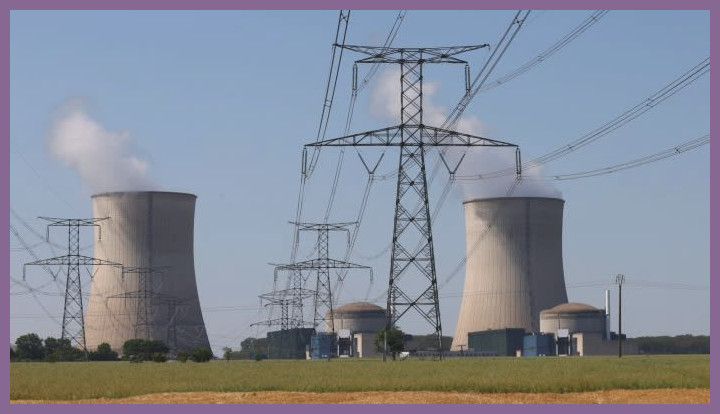
In an unprecedented shift, EU ministers have ventured into uncharted territory by endorsing nuclear energy as a cornerstone of their agenda for the upcoming UN climate summit—an indication that atomic power is reclaiming a place in the European energy landscape.
Yet, the discussions leading to this remarkable agreement were anything but smooth. Tensions between France and Germany simmered throughout the negotiations over the EU’s strategy for COP29, a critical gathering set to unfold in the vibrant city of Baku, Azerbaijan, next month. Ultimately, however, EU nations converged on a consensus to expedite the rollout of “low-emissions technologies,” aligning with commitments established at last year’s COP28, where nuclear energy was notably included.
This renewed advocacy for nuclear energy signals a profound transformation in the European perspective towards this once-controversial source, a transformation that crystallized following the shadows cast by the catastrophic Fukushima disaster in Japan in 2011. A coalition of primarily Eastern European countries, along with France, is prepping to publicly unveil a paper that implores the European Commission to acknowledge the “pivotal role” that nuclear energy can play, emphasizing its vital integration into forthcoming EU energy regulatory frameworks.
On the fringes of the Monday meetings, the Dutch and French governments solidified their commitment to nuclear energy by signing an accord aimed at enhancing cooperation and advocating for increased institutional backing for atomic power. However, this burgeoning support isn’t without its dissenters. Countries like Germany, Austria, and Denmark are voicing concerns that excessive emphasis on nuclear energy could siphon off critical investments from renewable sectors, which they argue present a more economical, cleaner, and accelerated solution to mitigating greenhouse gas emissions.
Leonore Gewessler, Austria’s climate minister, expressed a stark warning: “Nuclear has been propped up by staggering amounts of public funding without establishing a sustainable economic model, while simultaneously, renewables costs have plummeted.” Her call to action? “Let’s allocate resources where the most cost-efficient solutions lie—and that’s renewables.”
The late-night agreement crafted by EU ministers encapsulates the bloc’s negotiating mandate for COP29, aiming to crown the EU as a formidable advocate amidst international climate discussions. Yet, insiders have cautioned that the nuclear debate has become somewhat of a diversion, obfuscating broader issues regarding the EU’s energy composition and its role in global climate finance.
According to Linda Kachler, head of Strategic Perspectives, a Brussels-based think tank, the dialogue has devolved into an “ideological battleground” focused more on technology preference than on the urgent question of expediting fossil fuel elimination—particularly from Russian sources.
A European official involved in the ongoing negotiations poignantly noted that positions on nuclear energy have morphed into “religious” fervor, with significant issues—like the EU’s financial commitments to nations hardest hit by climate change—simmering in the background like the proverbial “elephant in the room.”
The summit, dubbed the “finance COP” by its organizers, aims to establish a novel target for climate financing directed at the world’s most vulnerable nations. Under the 2015 Paris climate agreement, nearly 200 countries are under pressure to agree upon a new figure for climate finance by next year, positioning COP29 as a critical juncture for such deliberations.
Yet, the gap remains wide. Developing nations are rallying for commitments in the ballpark of $1 trillion to $1.3 trillion, while influential players within the EU, the largest climate finance donor, exhibit caution about augmenting public funds without complementary mechanisms to enhance private investment.
Calls have risen from within to broaden the donor base to include nations like China, Singapore, and Saudi Arabia—countries that, while classified as “developing” by UN standards established in 1992, have achieved significant industrial and financial prowess.
Eamon Ryan, Ireland’s climate minister, forecasted a challenging road ahead, anticipating that negotiations in Baku could set the stage for the “most arduous COP since Paris,” with financial discussions at the center of contention.
Amidst this backdrop, EU ministers, including Ryan and Agnès Pannier-Runacher from France, urged a renewed focus on establishing structures such as a capital markets union in Africa, designed to galvanize funding for renewable energy initiatives.
Wopke Hoekstra, the EU’s climate commissioner, revealed that he had engaged in “frequent fruitful discussions” during preparatory meetings in Baku regarding the financing strategy. He elaborated on a three-pronged approach: ensuring increased availability of funds—both public and private; avoiding an overextension of resources while targeting those most in need; and compelling all capable nations to fulfill their financial obligations.
Finland’s climate minister Kai Mykkänen also chimed in, pressing for a reevaluation of the classification of nations such as Singapore, which, despite its substantial GDP per capita, continues to be regarded through the outdated lens of a developing nation.
As the tone of these discussions intensifies, one thing is abundantly clear: the interplay between nuclear energy, renewable sources, and climate finance will occupy center stage as negotiations unfold in the coming weeks, dictated by an urgent need for pragmatic solutions that steer the world toward a sustainable future.