

Hurricane Milton unleashed its fury upon the sun-soaked shores of Florida’s west coast overnight, heralding a dramatic second visitation of major hurricane wrath within a mere fortnight. This tempestuous arrival comes as the southeastern United States continues to grapple with the aftermath of Hurricane Helene—an unforgiving force of nature that tragically claimed over 225 lives and left its indelible mark of destruction on the mountainous terrains of Appalachia.
In the world of commerce, oil prices took a slight dip yesterday, succumbing to the pervasive shadows of diminished demand from the vast Chinese market, which eclipsed the anxieties swirling around potential Israeli strikes on Iran’s oil infrastructure. As the market closed, Brent crude, the global benchmark, settled at $76.58 per barrel, while its US counterpart, West Texas Intermediate, slipped to $73.24—a record low for the week.
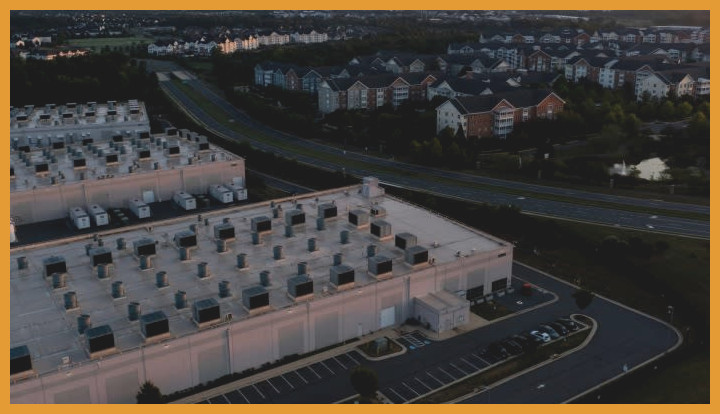
In the realm of energy, a tempest brews as Bain & Company, the consultancy powerhouse, delivers a grim forecast: by the year 2028, the relentless surge in demand catalyzed by the burgeoning data center boom in the United States could outpace generation capabilities by a staggering 26 percent compared to 2023 figures. This projection not only surpasses any supply increments witnessed in the past two decades but also heralds an impending crisis. “This is a pressing issue on the horizon,” declared Aaron Denman, the guiding force behind Bain’s Americas utilities and renewables practice, emphasizing that such a deficit could result in rate escalations likely to exceed general inflation.
To navigate this brewing storm, utilities will require an astronomical $900 billion infusion to fund new generation sources, ushering a relentless 1 percent annual increase in customer bills by 2032, as noted in Bain’s recent investigation. The energy sector finds itself thrust into a conundrum, wrestling with the implications of an ever-accelerating demand stream primarily driven by artificial intelligence data centers, the reshoring of manufacturing, and the quest for electrification—all elements that risk slowing down the essential energy transition.
Just last month, ICF released a sobering report anticipating an average growth of 9 percent in US power demand by 2028, accompanied by a potential spike in wholesale prices by as much as 19 percent. BloombergNEF weighed in with disheartening revisions of US emissions reduction prospects, attributing the sluggish transition partly to this escalating power appetite.
A stark illustration of this strain emerged from a recent power auction conducted by PJM Interconnection—encompassing Virginia’s Loudon County, a veritable hub for data centers—where auction prices surged nearly tenfold compared to two years prior, a direct reflection of the tightening supply landscape. Christopher Kalnin, the chief executive of gas producer BKV, highlighted the staggering costs associated with the necessary new supply and transmission lines, likening the endeavor to constructing a new highway in a bustling, congested area—an inherently extravagant proposition.
This voracious load growth materializes after two decades of stagnation in power demand across the nation. Bain predicts that by 2028, data centers will account for a gargantuan 44 percent of the entire demand growth, as corporations race to develop the next frontier of artificial intelligence.
In response to these pressing dynamics, Bain advocates for a reevaluation of antiquated rate structures that unfairly burden residents with the fiscal responsibilities required to accommodate this data-driven expansion. “Sustaining this model is untenable,” Denman cautioned, provoking both thought and action.
Moving from climate calamities to political machinations, the upcoming November election promises no ground-shaking alterations for US oil drillers, regardless of whether Donald Trump or Kamala Harris emerges victorious. Trump’s fossil fuel-focused campaign promises a revival of drilling, intent on dismantling the regulatory framework laid by the Biden administration. Conversely, Harris’s record boasts of unprecedented oil output during her vice presidency, while also asserting a non-interference policy toward fracking—an about-face from her previous stance in 2019.
Nevertheless, according to Rystad Energy’s latest insights, neither candidate’s agenda will inhibit the ceaseless momentum of the US shale industry, which remains steadfast in prioritizing shareholder returns and growth through acquisitions—a discipline that took root during the Obama era. Rystad anticipates a steady 2.21 percent annual increase in US shale production from 2025 to 2028, irrespective of the political landscape. “Ultimately, market fundamentals reign supreme, independent of political whims,” Matthew Bernstein, a senior analyst at Rystad, asserted.
In labor movements, significant transitions unfold: Emma Pinchbeck is poised to take the helm of the Climate Change Committee in November, transitioning from her role at Energy UK, whilst influential climate figure John Kerry joins Galvanize Climate Solutions as co-executive chair. In similar shifts, Melissa Lott departs Columbia University after a substantial tenure, Anjali Acharya steps into a strategic position at The Nature Conservancy in India, and Verde Clean Fuels appoints George Burdette as its chief financial officer.
As inquiries persist around the dynamics shaping oil prices, over 100 CEOs, including influentials from Ikea, Volvo, and AstraZeneca, are urging governments to enrich the case for green investments. Meanwhile, India’s oil and gas minister has announced an ambitious revamp of regulations to expedite oil production, racing against the clock to extract maximum crude before dwindling market opportunities arise.