

Brief:
In a significant move to dominate the circular energy storage universe, battery powerhouse LG Energy Solution has unveiled its ambitious mid- to long-term business strategy, a revelation made on October 7. This marks a pivotal moment, as the company shares its grand plans for the very first time since its inception in 2020.
The blueprint reveals an aggressive pursuit of next-gen battery technologies tailored for the automotive sector, harnessing cutting-edge innovations like high-nickel, lithium iron phosphate, and lithium manganese iron phosphate battery chemistries. Over the next five years, LG aims to elevate its revenue beyond 33.7 trillion won (roughly $26.2 billion in 2023), targeting a doubling of this figure, all while striving for a mid-teen profit margin through an expanded energy storage suite.
Insight:
In an astute strategy to bolster its market resilience, LG is diversifying its battery portfolio, thereby mitigating reliance on the volatile electric vehicle (EV) domain. This expansion encompasses ventures beyond automotive applications, delving into realms like urban air mobility, maritime industries, and robotics.
By 2026, the company’s Advanced Automotive Battery division seeks to navigate the current EV market lull through enhanced production efficiencies across its global facilities. LG is also set to launch a software and services arm focusing on energy storage systems, with ambitions to quintuple revenue from this segment by 2028. A major milestone is slated for 2025, when LG commences battery cell production for energy storage in North America, aiming for the lion’s share of the market in the U.S.
“Our vision encapsulates the ultimate goal of LG Energy Solution to enable sustainable growth,” asserted David Kim, CEO. “This vision embodies our aspiration to harness energy that unlocks all potential powers, fostering an environment for both the company and its members to realize boundless growth potential.”
Despite this broadening of focus, LG remains steadfast in its commitment to automotive innovation. The company is venturing into the development of anodeless solid-state batteries, eschewing traditional lithium or graphite-based anodes. Alongside this, LG plans to accelerate the mass production of semi-solid batteries, with an eye toward utilizing more economical sulfur and sodium battery chemistries.
These pioneering designs are not merely about innovation; they are strategic moves to slash costs, boost energy density, and turbocharge production capabilities, including the adoption of a revolutionary dry electrode manufacturing technique.
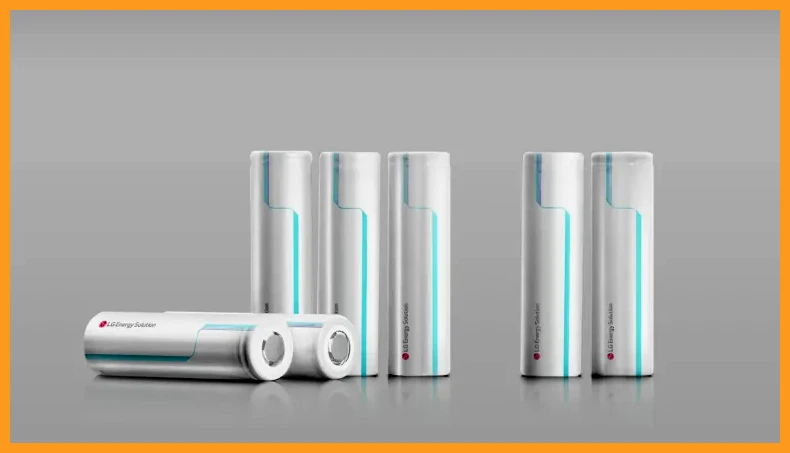
In parallel, LG intends to enhance its cylindrical battery cell range, leveraging its 46-series cell format and crafting new designs that specifically address the requirements of automakers. By 2028, the introduction of high-voltage mid-nickel pouch cells and dry electrode lithium iron phosphate batteries will further solidify its market position.
“We have established global standards in the battery industry with our longstanding legacy in the business and will continue to maintain our industry leader status,” Kim proclaimed.
The company’s roadmap extends beyond immediate goals; aiming to secure the top supplier position in North America by 2030 while simultaneously expanding its footprint in Europe, LG Energy Solution is gearing up for a future defined by innovation and robust market presence.