

Can a $20bn Refinery Secure Mexico’s Energy Self-Sufficiency?
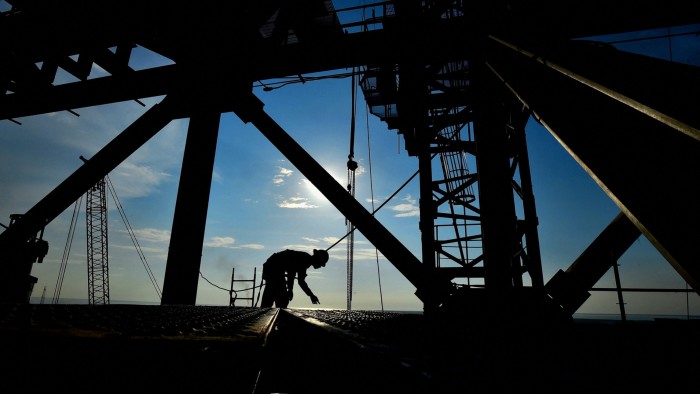
In Mexico, a large new oil refinery named Olmeca is starting to produce fuel along the Gulf coast. Former President Andrés Manuel López Obrador described this $20 billion project as a major step towards making Mexico energy independent.
However, the refinery has faced challenges, including being more than double its original budget and lacking essential pipeline connections. Experts believe it may not significantly reduce Mexico’s heavy reliance on energy imports from the US. Currently, Mexico imports roughly half of its gasoline, a third of its diesel, and over 60% of its natural gas, mainly from the United States.
The International Energy Agency predicts that by 2030, Mexico’s crude oil production could decline more than any other country, possibly making it a net importer for the first time since the 1950s. John Padilla, a partner at an energy consultancy, remarked that the government’s approach has ignored the need to stabilize oil production to support future energy goals.
With rising tensions between the US and Mexico, including possible military intervention, the country is understandably cautious about its energy dependence on its neighbor. During his presidency, López Obrador took several measures to reduce this reliance, such as acquiring part of a Texas refinery, upgrading existing plants, and constructing Olmeca.
Current President Claudia Sheinbaum continues this agenda, emphasizing a commitment to national interests. She has stated, “Only a traitor hands their country over to foreigners,” referencing sentiments from a historic president.
To bolster domestic supply, the government has been cutting crude exports, which could impact US refiners dependent on Mexican crude. However, Olmeca also has its own hurdles. As of May, it was operating at about one-third of its 120,000 barrels per day capacity and managing to produce 50,000 barrels of diesel and 43,000 barrels of gasoline daily. Even at full capacity, it would only cover a fraction of national demand.
Moreover, the refinery lacks adequate pipeline and rail connections, relying instead on trucks and its nearby port to distribute fuel across the country, raising concerns about higher operational costs.
There’s also the possibility that Mexico might need to import crude oil to keep the refinery running as local production has been declining since 2004. Pemex, the state oil company, faces significant debt and reduced investment, with most output coming from a mere seven of its 240 fields.
Sheinbaum is working on a long-term financial and production plan for Pemex, suggesting that the path to energy self-sufficiency may require increased public and private investment. Ramses Pech, an energy consultant, warned that without major investment, true self-sufficiency could remain elusive for decades.
Overall, while the Olmeca refinery was designed with great expectations, its current and future challenges raise questions about whether it can genuinely provide energy independence for Mexico in the long run.