

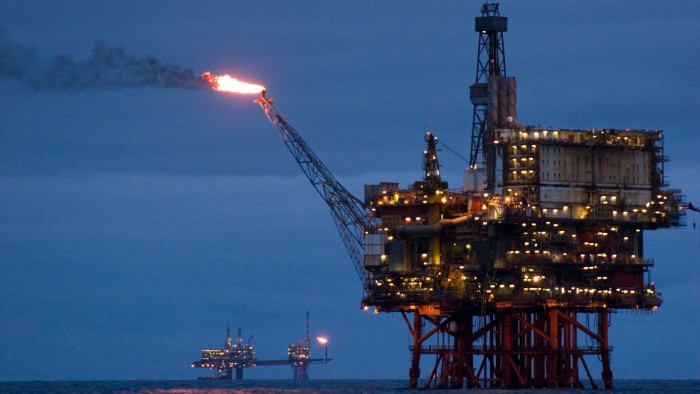
The UK government is moving forward with its plan to stop issuing new oil and gas exploration licenses, while remaining open to a practical approach regarding production. This decision has garnered praise from the oil and gas industry.
In a recent consultation, the government confirmed its election promise by stating it would no longer grant licenses for exploring new oil and gas fields. This decision, however, has faced criticism from the GMB union, which described it as “madness.”
Government officials noted that current global oil and gas production plans do not align with the goals of limiting global warming to below 1.5 degrees Celsius. Consequently, they aim to promote the development of cleaner energy sources instead. Yet, the consultation leaves open the option for flexible measures, such as “tiebacks,” which would allow drilling in new fields through existing neighboring ones. This flexibility was viewed positively by industry representatives, who have expressed concerns that limiting licenses could increase the UK’s dependence on imported energy.
The consultation seeks feedback on how to ensure that regulatory frameworks can support activities necessary to achieve broader government goals. One industry insider welcomed this commonsense approach to available resources.
Martin Copeland, the Chief Financial Officer of Serica Energy, expressed relief that the government recognizes the complexities of the situation and indicated that the industry is ready to contribute to developing a practical framework for the future of the North Sea.
Delays in the consultation process arose due to concerns within the government about how the ban on new licenses might be perceived, especially in light of past comments from President Trump regarding American oil production.
Alongside this licensing consultation, the government introduced plans for a new tax system to commence in 2030, coinciding with the expiration of the current windfall tax established in response to the surge in prices due to geopolitical tensions, including Russia’s invasion of Ukraine.
The proposed tax framework would revert the sector to paying the standard tax rate of about 40%, with provisions to increase payments if wholesale prices rise significantly. This strategy aims to provide more certainty for investors, who have voiced concerns that sudden one-off taxes undermine confidence in the industry.
The future of the North Sea presents a significant challenge for the UK’s Labour government and Energy Secretary Ed Miliband, with evidence indicating that the sector supports over 200,000 jobs in the UK.
Despite initiatives to transition toward renewable technologies, oil and gas still represented 75% of the UK’s energy demand in 2023, underscoring the continuing importance of these resources.
Even as the world shifts to renewables, UK production has declined significantly, with 2023 figures showing a record low of 34 million tonnes, just a fraction of the peak production level in 1999.
Critics, including the GMB union, argue that banning new licenses without addressing existing energy needs is illogical, particularly in the current geopolitical landscape. David Whitehouse, CEO of Offshore Energies UK, emphasized that while there are still valuable oil and gas resources offshore, it’s crucial to harness them responsibly alongside the movement toward renewable energy. He called for clear and meaningful engagement moving forward.