

Europe is currently facing a significant challenge as it attempts to transition to a net-zero energy system while simultaneously strengthening its defense capabilities. This dual focus is demanding substantial investment—estimates suggest an additional €300 billion per year will be needed for clean energy projects through 2030. On top of this, European nations are considering increasing defense spending to about 3.5% of their GDP, which would require similar financial resources.
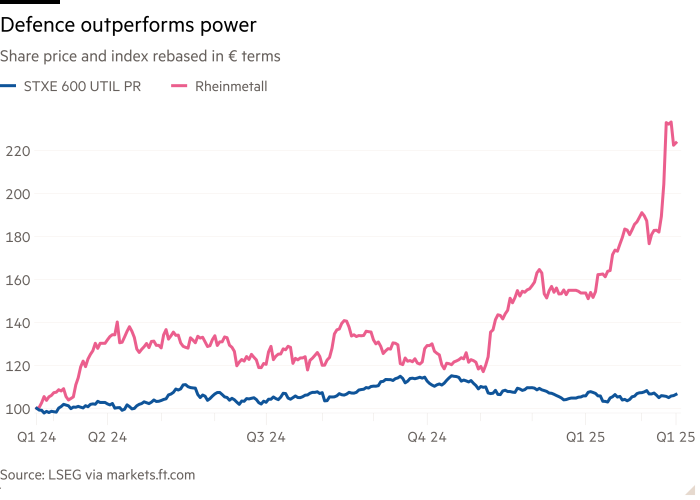
Recent trends in the market indicate that investors are prioritizing defense over green initiatives. Companies like Rheinmetall and Safran, which focus on defense, have exceeded the performance of many firms involved in the green transition, such as European utilities.
Despite these challenges, financing both priorities can be manageable. Defense spending is primarily a governmental responsibility. While some countries may struggle with debt, the overall debt-to-GDP ratio in the EU remains under 90%, indicating room for joint borrowing, albeit politically complicated.
Conversely, a majority of investments in the energy transition are expected to come from the private sector. Many of these technologies, like solar energy and batteries, are already financially viable and will not significantly increase costs for consumers.
However, certain areas of the energy shift may require public funding, particularly for initiatives like heat pumps, while carbon capture technology may also be at risk due to budget limitations.
There’s also a concern about the increased demand for materials and labor that these investments will create. Energy and defense sectors have different supply chains, yet some overlap could lead to increased costs and delays.
Analyzing Europe’s investment patterns, it appears that approximately 15% of its GDP goes to productive assets, compared to about 17% in the United States. If managed effectively, domestic investments could spur growth, benefiting various sectors of the European economy in the long run. The ambitious transition that Europe is undertaking is seen as essential and worthwhile, despite the hurdles ahead.