

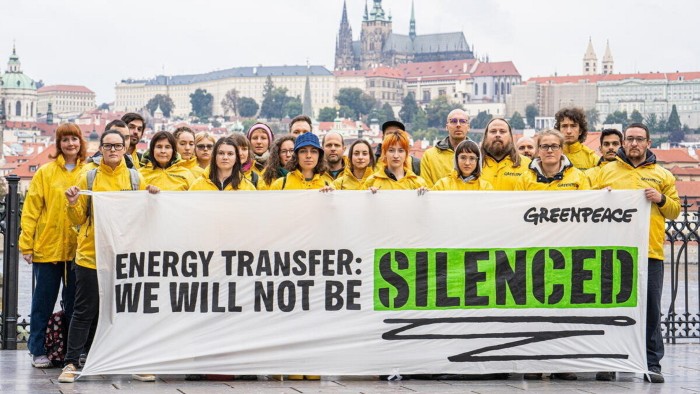
Greenpeace International has taken a bold step by filing a lawsuit against the American pipeline company Energy Transfer in a Dutch court. The environmental organization claims that Energy Transfer is attempting to stifle its voice and financially burden it through what they describe as frivolous legal actions. This case tests new European Union regulations aimed at protecting free speech.
The lawsuit, lodged at the Amsterdam District Court, highlights an ongoing legal feud between Greenpeace and Energy Transfer, a company co-founded by Kelcy Warren, known for his significant contributions to political figures like Donald Trump. Greenpeace seeks to reclaim hundreds of millions of dollars in expenses and potential damages linked to Energy Transfer’s legal battles against the group after it protested the Dakota Access Pipeline in 2016. Nevertheless, legal experts point out that recovering damages in the U.S. could be challenging.
Back in 2017, Energy Transfer accused Greenpeace and its U.S. affiliates of spreading misinformation regarding the construction of the 1,700-mile oil pipeline. This, according to Energy Transfer, harmed its relationships with financial institutions and incited vandalism against its property. While the pipeline was ultimately completed, Warren expressed strong discontent over Greenpeace’s actions, stating in a 2017 interview that they would “pay for it.”
Greenpeace is also facing a trial in North Dakota this month due to a civil case brought by Energy Transfer, which could hold the organization liable for over $300 million in damages related to its protests in 2016. Through its lawsuit in the Netherlands, Greenpeace hopes to safeguard itself against potential financial ruin that could undermine its U.S. operations and dissuade others from exercising their rights to free speech.
The environmental group is leveraging a newly introduced EU directive aimed at combating strategic lawsuits against public participation (SLAPPs), which are often used to intimidate activists and journalists with burdensome litigation. Greenpeace aims to secure a ruling in the Dutch courts that would prevent any judgment in the North Dakota case from being recognized in the Netherlands, thereby safeguarding its assets there.
Daniel Simons, a senior legal counsel at Greenpeace, remarked that a favorable outcome would send a strong message to corporations attempting to exert their influence unchecked. He suggested that this could inspire civil society in the EU and offer guidance to those fighting against SLAPPs in other regions.
In its filing, Greenpeace states that the actions of Energy Transfer exemplify SLAPP lawsuits that violate its rights under European human rights laws as well as the new EU anti-SLAPP provisions. Energy Transfer has yet to respond publicly to the lawsuit.
Warren has previously made controversial remarks regarding environmental activists and has also shown financial support for Trump’s political campaigns.
The recent EU measures, often referred to as Daphne’s law, follow actions taken by 33 U.S. states aimed at reducing the prevalence of abusive lawsuits. However, North Dakota has not yet implemented similar reforms.
Greenpeace’s approach of non-violent protest against fossil fuel companies has prompted a fierce response from these businesses globally. For instance, a French court dismissed a case brought by TotalEnergies against Greenpeace last year over a report on the company’s environmental impact, and in December, Greenpeace settled a lawsuit with Shell which could have resulted in over $11 million in damages.
This ongoing legal dispute underscores the tension between corporate interests and environmental activism.