

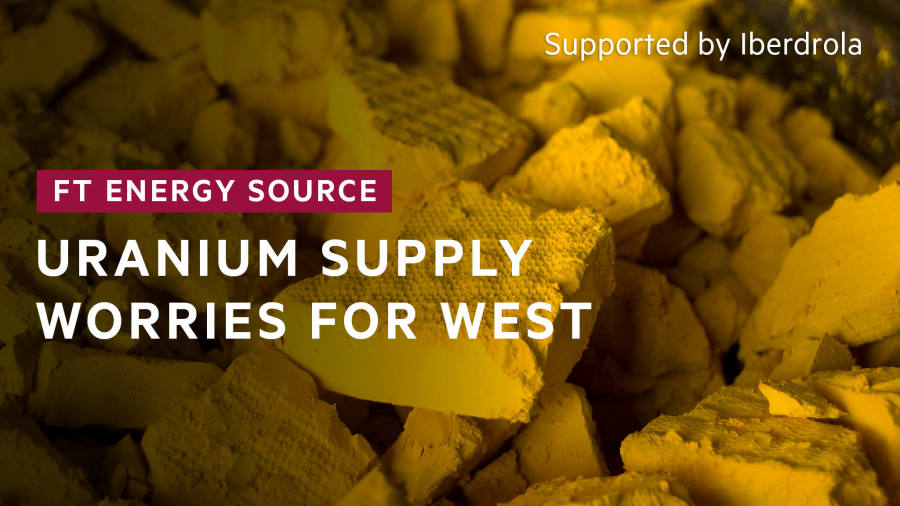
Nuclear energy is making a comeback as countries focus on low-carbon solutions to tackle climate change. Currently, around 60 nuclear reactors are being built globally, with an additional 110 in the planning stages. The process of turning uranium ore into fuel for these reactors involves several steps: mining, conversion, and enrichment. Experts predict that by 2040, the demand for uranium could reach 130,000 tonnes.
However, the supply of uranium seems to be tightening, particularly for Western nations. Uranium ore prices have risen significantly compared to five years ago, with processed uranium prices surging even more sharply since Russia’s invasion of Ukraine in early 2022. Russia currently controls a substantial portion of the global uranium market—22% of conversion capacity and 44% of enrichment capacity. Due to a U.S. ban on Russian uranium, Western utilities are facing limitations in accessing these services, although some exemptions are allowed until the end of 2027.
Additionally, President Vladimir Putin has enacted restrictions on exporting enriched uranium. In Western countries like France, the U.S., and Canada, there are large conversion facilities. Yet, there has been no commitment to build new facilities, creating a possible dilemma—power companies may hesitate to enter long-term supply agreements without new conversion plants, while suppliers are reluctant to invest in such facilities without guaranteed contracts.
The situation is becoming more complex when it comes to uranium ore supply. Kazakhstan, which produces 43% of the world’s uranium, is expected to direct more of its output to Russia and China in the coming years. This shift is partly due to increasing long-term agreements with China and the difficulty of shipping to the West via St. Petersburg due to sanctions. Alternative shipping routes, like those through the Caspian Sea, Azerbaijan, and Georgia, are not only more costly but also face infrastructure challenges.
In response to these supply issues, the West is working to bolster its uranium production. Since 2022, at least ten uranium mines have reopened in the U.S., Canada, and Australia. Nevertheless, production is unlikely to meet global reactor needs through 2030 and beyond, leading to concerns that uranium markets may soon face a period of scarcity.