

The European aviation sector is rethinking its plans for hydrogen-powered planes as it aims for net zero emissions by 2050. A recent forecast reveals that the expenses related to decarbonization have increased significantly.
Airlines, airports, and other industry players have committed to achieving net zero carbon emissions by the middle of the century through a combination of new technologies, with a focus on alternative fuels.
However, a new update to a net zero roadmap shows that the anticipated role of hydrogen-powered planes has shrunk. The report indicates that these aircraft will only account for about 6% of net emissions reductions by 2050, a decrease from the 20% estimate in 2021.
The report, commissioned by five industry groups, states, “The contribution of hydrogen-powered aircraft is notably reduced.” It attributes this to a lower expected market presence for these planes and delays in their rollout.
While the aviation industry still aims for net zero by 2050, the report serves as a “reality check” for the European Commission, urging immediate actions to support decarbonization.
The financial burden of achieving net zero is now estimated at over €1.3 trillion, which is €480 billion higher than previous estimates. Olivier Jankovec, director-general of ACI Europe, remarked, “The costs of getting to net zero have ballooned. The aviation industry cannot manage this alone.”
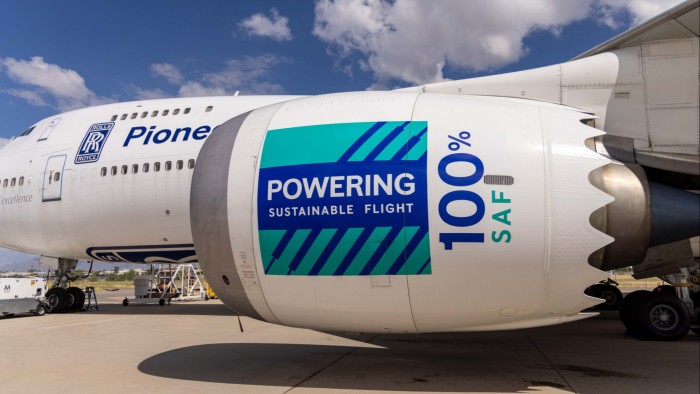
The rise in expenses is largely due to the shift towards sustainable aviation fuels (SAFs), which differ from traditional fossil fuels and are derived from alternative sources like crops and waste. SAFs can be used in existing aircraft engines and can cut emissions during flights by roughly 70%. However, they come at a higher cost and are produced in limited volumes.
As hopes for hydrogen and electric flights diminish, airlines increasingly rely on SAFs to reduce their carbon footprints. Carlos López de la Osa, an aviation manager at T&E, an environmental NGO, noted, “Hydrogen planes have nearly vanished from the roadmap.”
To maintain leadership in zero-emission aircraft, Europe needs to implement effective policies that motivate manufacturers to fulfill their commitments.
European aircraft manufacturer Airbus remains optimistic about hydrogen flight compared to Boeing. The company is collaborating with various stakeholders to secure the investments necessary for this vision. Airbus is still focused on delivering a commercially viable hydrogen-powered aircraft, with a target for a short-range model by 2035, exploring different technologies based on hydrogen combustion and fuel cells.
Nonetheless, Airbus acknowledges that the development of the necessary infrastructure, especially for hydrogen sourced from renewable energy, is progressing more slowly than expected.
While hydrogen is predicted to have a greater impact in the latter half of the century, Airbus admits it won’t be a primary solution for achieving 2050 decarbonization goals.
Guillaume Faury, CEO of Airbus, has emphasized the necessity for robust infrastructure to support hydrogen aviation. He mentioned that understanding the pace of hydrogen’s growth will take priority in future planning.
Other companies, including easyJet and Rolls-Royce, are also investigating hydrogen engine technology. The trade group Airlines4Europe maintains that hydrogen remains part of the mix for making aviation more sustainable.
But experts, like Nikhil Sachdeva from Roland Berger, suggest that anticipating more than 5% of decarbonization from hydrogen in aviation by 2050 is overly optimistic, given challenges related to safety, operations, and cost.