

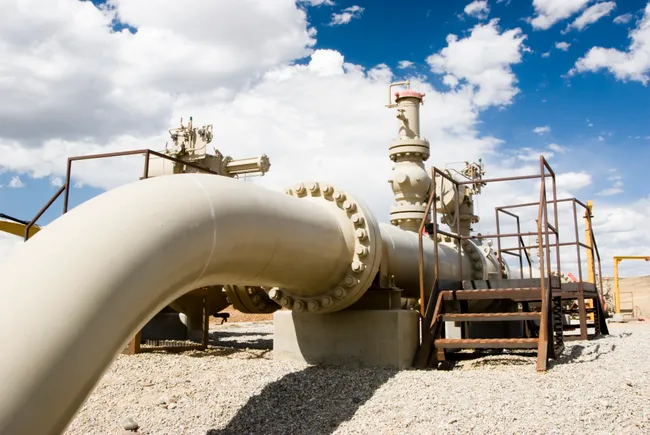
The Federal Energy Regulatory Commission (FERC) has reinstated the approval of a significant gas pipeline project in the New Jersey area, which is owned by Transcontinental Gas Pipe Line Co., a subsidiary of Williams Co. This decision came unanimously from the commission on Friday.
Additionally, FERC concluded a review aimed at possibly altering its procedures regarding how proposed gas pipelines and related infrastructure would be assessed for their impact on greenhouse gas emissions.
Back in January 2023, FERC had already green-lighted Transco’s $950 million Regional Energy Access expansion project, which spans Pennsylvania, New Jersey, and Maryland. This project was fully subscribed upon its launch, boosting Transco’s pipeline capacity by 829,000 dekatherms daily to support local gas utilities.
However, in July, the U.S. Court of Appeals for the District of Columbia Circuit invalidated FERC’s certificate for this project, indicating that FERC didn’t adequately justify why it ignored studies suggesting the pipeline might not be necessary. The court also criticized the commission’s failure to assess the significance of the project’s greenhouse gas emissions.
In reinstating the project’s permit, FERC reaffirmed its belief in the project’s necessity. The commission rejected concerns that utilities would purchase excessive capacity and pass those costs onto consumers. It mentioned that New Jersey utility regulators would review the prudency of the pipeline capacity contracts.
FERC stated, “We continue to find that existing agreements with local distribution companies indicate the market need for new capacity, just as any other precedent agreements do.” This indicates that the agreements backing Transco’s project show a strong indication of its necessity.
Without FERC’s reinstatement, Transco would have had to shut down operations as of January 28, which the American Gas Association highlighted as a critical issue. They emphasized the need for infrastructure permitting reforms, ensuring that natural gas projects enhancing energy reliability receive prompt evaluations, especially during severe winter weather impacting many Americans.
Regarding the court’s ruling on greenhouse gas emissions, FERC mentioned that it cannot determine the significance of a project’s emissions and will instead evaluate the GHG impacts uniquely for each case. They noted, “We cannot classify any project’s GHG emissions as significant or insignificant as we lack a universally accepted standard to gauge their significance in terms of adverse climate change effects.”
FERC also pointed out that no federal agency has established a standard or method for determining the “significance” of emissions that they could adopt for their assessments.
FERC Concludes GHG Policy Review
In a related decision, FERC has ended its draft GHG policy proceedings. Initially, in February 2022, FERC had proposed a GHG policy to address carbon dioxide emissions from gas projects. However, following significant backlash from Congress, the interim policy was downgraded, and FERC sought public comments on it, but it was never implemented.
FERC indicated that the issues in the draft are better evaluated on a case-by-case basis, as they have done previously. This decision was supported by Democratic commissioners who said that this approach provides clarity for everyone involved and meets the commission’s responsibilities to consider environmental impacts as part of its decision-making process.
According to FERC’s policy, the commission will estimate the “reasonably foreseeable” GHG emissions from a project, examine the potential detriments those emissions might cause, and, whenever possible, put that information into context by comparing it to national and statewide emission levels and estimating the social consequences of those emissions.