

What happens when the largest oil producer in the world tries to expand production while the top oil importer may be hitting a peak in demand? Recent signs indicate that China’s demand for oil, which has driven half of global oil demand growth for the last thirty years, is leveling off. This is primarily due to slower economic development and a significant transition towards renewable energy and electric vehicles. Meanwhile, returning U.S. President Donald Trump has declared a national energy emergency aimed at increasing fossil fuel production, moving away from the green initiatives of the previous administration. These developments could potentially lead to an oversupply of oil and declining prices, though the actual situation is more complicated.
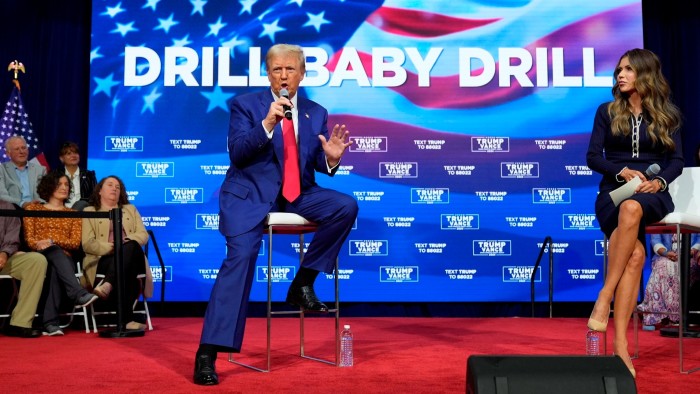
The differing energy security strategies of the U.S. and China are central to this issue. China’s shift toward renewable energy isn’t just about environmental concerns; it’s also a strategic move to lessen reliance on imported oil. On the other hand, Trump’s administration promotes a “drill, baby, drill” policy, appealing to consumers frustrated with the costs associated with transitioning to green energy. Trump is set on ensuring that the U.S. does not become dependent on a green energy supply chain that is controlled by China.
Scott Bessent, a potential Treasury secretary under Trump, claims the U.S. could increase oil production by an additional 3 million barrels daily by 2028. There is potential for additional gains in natural gas production as Trump aims to export it to Europe. Despite this optimism and regulatory rollbacks, raising U.S. oil production—which currently sits at a record 13 million barrels per day—will be challenging. Producers are unlikely to drill much more at current prices around $75 per barrel. A recent survey indicated that oil firms need prices at $65 to make drilling profitable and $89 for substantial increases.
Conversely, actions from the U.S. government may curtail oil exports from other countries. Recently, the Biden administration tightened sanctions on Russian oil, potentially removing up to 2 million barrels a day from the market. The new president has also hinted at increasing restrictions on Iranian oil exports, following a similar tough stance during Trump’s first term, which could further decrease global supply.
This situation may create openings for Saudi Arabia, the world’s swing producer. The OPEC group has been withholding planned production increases to adjust to the falling demand from China. Trump’s new energy policies could ironically lead to Saudi Aramco increasing production more than U.S. companies. By addressing the World Economic Forum recently, Trump called on OPEC to lower global oil prices, which could allow him to further his geopolitical objectives without hiking domestic prices for consumers. Even if U.S. oil output doesn’t rise significantly, domestic producers may benefit from the increased demand spurred by Trump’s policies, such as cutting incentives for electric vehicles.
Trump’s “drill, baby, drill” approach aims to instill confidence in both U.S. and global oil and gas producers, signaling a commitment to rolling back regulations and environmental, social, and governance principles that have hindered the industry. This strategy, however, raises questions about the global shift needed to effectively combat climate change. While China continues its coal usage, its push toward green energy seems like a forward-looking strategy, whereas the U.S. appears to be maintaining its current course. This choice by Trump’s administration may have significant long-term implications, potentially placing the U.S. on the “wrong” side of history as the fight against climate change faces serious challenges.