

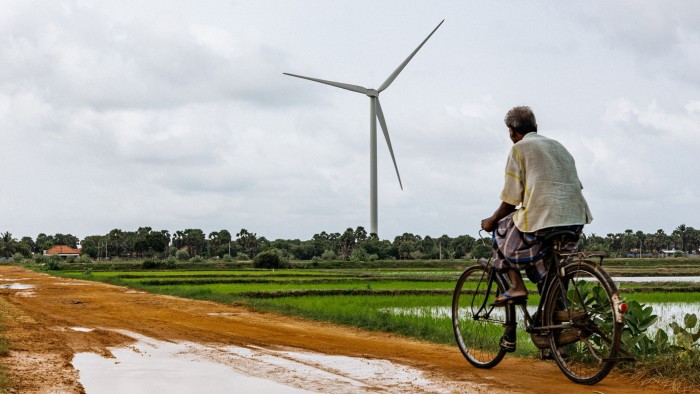
Sri Lanka has decided to cancel a power purchase agreement with the Adani Group, specifically its renewable energy unit, amid corruption allegations that surfaced in the United States last year. These allegations have prompted a closer look at some of Adani’s overseas projects.
During a cabinet meeting led by President Anura Kumara Dissanayake last month, officials decided to withdraw the agreement involving two wind power projects worth $442 million. They have also called for a committee to examine the terms of the project. This document, marked as “Urgent & Confidential,” was dated January 2, and the news was first reported by the AFP news agency.
Adani Group has responded to reports about the cancellation of its wind projects in Mannar and Pooneryn, stating that these claims are “false and misleading.” However, they did confirm that the Sri Lankan government is reviewing the terms of the agreement. They explained that the cabinet’s decision to reassess the tariff established in May 2024 is a common procedure, especially with a new government in place, to ensure alignment with current priorities and energy strategies. Adani also reaffirmed its commitment to invest $1 billion in Sri Lanka’s green energy sector.
In November, the U.S. Department of Justice and Securities and Exchange Commission filed charges against Gautam Adani, the billionaire chairman of the group, along with seven others, in connection with an alleged scheme to bribe officials in five Indian states for favorable solar power contracts. Adani has dismissed these charges as groundless, but the controversy has significantly affected the company’s stock value, leading many officials in countries with contracts to reconsider their agreements.
Sri Lanka had entered into a 20-year power purchase agreement with Adani Green Energy in May for two wind power stations. Adani is also involved in constructing a port terminal in Colombo, which was initially set to receive funding from the U.S. International Development Finance Corporation.
Dissanayake’s National People’s Power party, during its presidential campaign last year, scrutinized the power purchase agreement established by the previous administration led by Ranil Wickremesinghe, promising to annul this deal.
The decision to cancel the agreement closely followed the president’s first trip abroad, where he met with Indian Prime Minister Narendra Modi.
In neighboring Bangladesh, Muhammad Yunus’s interim government is taking steps to review several power deals made under the regime of the former leader Sheikh Hasina, which includes Adani’s Godda thermal power project, according to the power advisor, Muhammad Fouzul Kabir Khan.
In Kenya, President William Ruto has terminated $2.6 billion worth of proposed infrastructure contracts with Adani following the U.S. bribery allegations.