

In the first edition of Energy Source from New York, we explore the latest developments in the energy sector. President Donald Trump has made headlines with a series of ambitious proposals on his first day in office. He announced plans to declare a “national energy emergency,” aiming to increase oil and gas production, cut prices for consumers, and expand energy exports from the United States.
Trump emphasized the importance of tapping into natural resources, referring to oil as “liquid gold,” and highlighted his commitment to “drill, baby, drill” as part of his vision for U.S. energy dominance. He promised to issue executive orders that would halt leases for large wind farms, roll back vehicle emissions regulations, and withdraw the country from the Paris climate agreement. In addition, Trump indicated plans to eliminate financial support for renewable energy under what many interpreted as a dig at the Biden administration’s green initiatives.
Despite these grand ambitions, there are uncertainties about whether the oil industry, with its focus on shareholder returns, will increase the investment necessary to drive up production. U.S. oil output is already at high levels, and global demand is not growing as quickly, which puts pressure on prices.
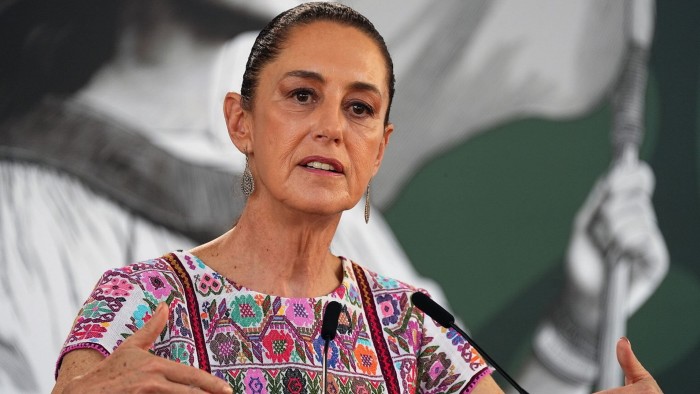
Contrastingly, Mexico is taking a different route. The Mexican government is planning to launch a state-funded low-cost electric vehicle brand called “Olinia,” meaning “movement” in Nahuatl. This initiative comes from President Claudia Sheinbaum’s administration, which has previously established other state-run companies.
The Olinia aims to provide an affordable electric car retailing for between 90,000 and 150,000 pesos ($4,400 to $7,300). It can be charged using a standard outlet, making it a convenient choice for many families. Currently, the electric vehicles available in Mexico are priced beyond what most families can afford, which is a gap the government aims to fill.
By the end of Sheinbaum’s term, the government hopes to introduce three different models of this vehicle, with plans to showcase the first model at the opening match of the 2026 World Cup in Mexico. The cars will be designed for city use, with parts manufactured in Sonora state.
However, skepticism surrounds the project. The shift towards electric vehicles in developing nations is slow due to high initial costs. Mexico’s automotive industry is primarily focused on exports, particularly to the U.S., where nearly 3.5 million vehicles were sent last year.
The strategy is not to rival expensive electric hybrids but to provide an alternative to the 7 million motorbikes in use, especially in urban areas lacking effective public transport. Experts indicate that while interest in electric vehicles is rising, the competition still heavily favors traditional gasoline engines.
The budget for the Olinia project is modest at 25 million pesos ($1.2 million), reflecting the tight fiscal environment in Mexico and raising questions about the feasibility of this venture. Competing with Chinese electric vehicles, which have become increasingly popular, presents another challenge, especially since one in five cars sold in Mexico this year were produced in China.
Additionally, the current infrastructure for electric vehicles in Mexico is limited, with only 3,321 charging stations available, and the electricity grid already under strain. The government is also under pressure to manage a balance between maintaining trade agreements with the U.S. and Canada amidst a crackdown on Chinese imports.
Skepticism also surrounds state-run enterprises in Mexico, with many struggling to retain viability. The government’s plans for state-created brands hark back to the country’s previous economic strategies during the so-called “Mexican miracle” of the mid-20th century.
The success of Olinia will largely depend on whether Mexican consumers embrace this offering.
“The Mexican auto industry has strong suppliers and a capable manufacturing network,” said Stephanie Brinley from S&P Global Mobility. “It will be interesting to see how it develops.”