

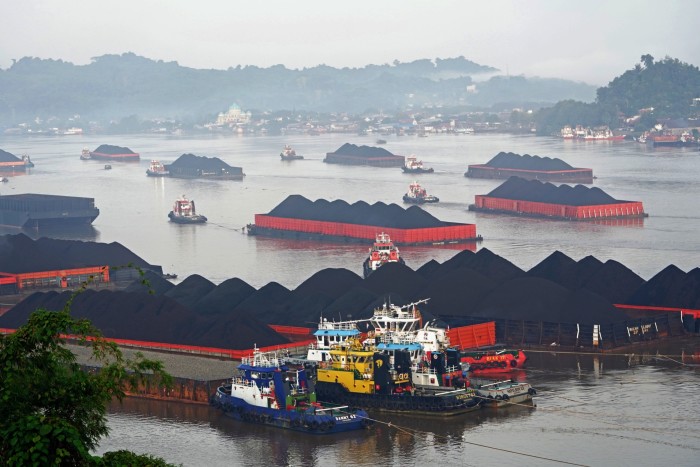
Indonesia faces serious challenges in achieving its ambitious goal to phase out coal power plants within 15 years, according to experts. They warn that this effort requires significant policy changes and increased investment in renewable energy.
In November, President Prabowo Subianto pledged to eliminate coal plants and add over 75 gigawatts of renewable energy by 2040. He also announced a target for Indonesia to achieve net zero emissions by 2050, which is ten years sooner than the plan of former President Joko Widodo.
However, experts believe these targets are overly ambitious for a country that generates around 66% of its electricity from coal, continues to build coal plants, and has struggled to meet previous climate change commitments.
Indonesia, which is one of the largest carbon emitters in the world, also depends on coal plants to support its nickel processing industry—an essential part of the global supply chain for stainless steel and electric vehicle production. In 2022, Indonesia’s energy sector produced approximately 650 million tons of carbon dioxide, ranking it as the seventh-largest carbon emitter globally.
Fabby Tumiwa, the executive director of the Institute for Essential Services Reform, emphasized the need for comprehensive reforms to reach the set goals. He stated, “It is technically and financially feasible … but many reforms are necessary.”
To meet President Prabowo’s target, Indonesia would need to develop about 8 gigawatts of renewable energy annually while retiring 3 gigawatts of coal power each year until 2040. However, data from energy think-tank Ember shows that only 3.3 gigawatts of renewable energy were added between 2018 and 2023.
Currently, renewable energy contributes only around 13% of Indonesia’s overall energy mix, compared to 40% from coal. The government aims for renewables to make up 23% by 2025, but analysts remain skeptical of reaching this target given the current development pace.
One major barrier facing the expansion of renewable energy is the playing field that heavily favors coal. Indonesia sets price ceilings on coal for power plants, resulting in cheaper electricity prices compared to alternatives. Renewable energy producers are required to sell electricity to the state utility, Perusahaan Listrik Negara, at prices that often render investments in clean energy unviable. Additionally, complex rules around ownership and local content in renewable projects hinder progress.
“There needs to be a significant increase in the attractiveness of renewable energy investments,” Tumiwa noted.
The International Energy Agency (IEA) has urged Indonesia to eliminate fossil fuel subsidies, including price caps on coal, in order to accelerate the transition to renewable energy.
Eniya Listiani Dewi, the director-general of new renewable energy, acknowledged at a summit that meeting the President’s targets presents a major challenge, but mentioned that the government would work to ease private sector investments in clean energy.
Funding for Indonesia’s energy transformation has been inadequate. In 2022, developed nations, led by the US and Japan, promised nearly $22 billion to assist Indonesia’s transition from coal, but only a small portion of those funds has been utilized.
Indonesia must not only increase its energy generation but also invest heavily in expanding transmission lines and energy storage. The potential for tapping into untapped green energy resources like geothermal and wind energy lies in areas away from Java, where the majority of the population resides.
In the last few years, coal production has surged, doubling since Indonesia signed the Paris Climate Agreement in 2016. In 2024, the country’s coal production reached a record 831 million tons, largely driven by a boom in nickel processing.
The rating agency Fitch highlighted Indonesia’s weak track record on previous energy commitments, warning that Prabowo’s policy goals face considerable implementation challenges, which could threaten the nation’s energy security.
Additional economic and environmental considerations will play vital roles in shaping the future of Indonesia’s energy sector as it attempts to transition towards a more sustainable model.