

Summary:
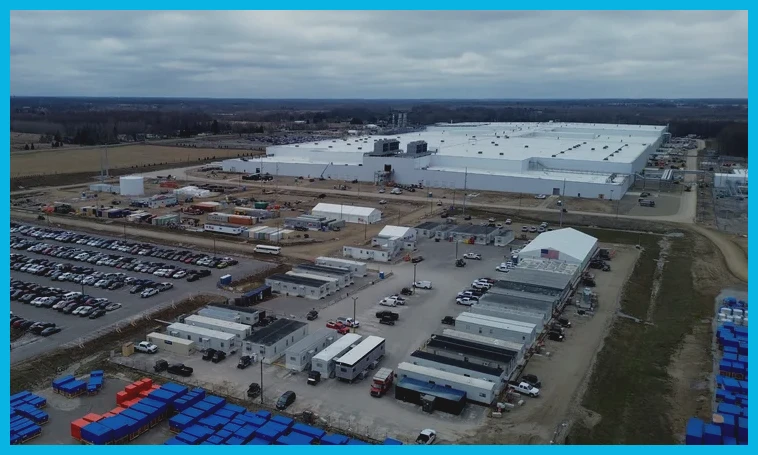
- General Motors (GM) has signed a non-binding agreement to sell its stake in the Ultium Cells battery plant located in Lansing, Michigan, to LG Energy Solution, as stated in a December 2 press release.
- Under this agreement, LG Energy Solution will quickly gain access to the 2.8 million-square-foot facility to begin setting up battery cell manufacturing equipment, with the plant expected to have an annual output of 41 GWh.
- GM aims to finalize this transaction in the first quarter of 2025, which will assist the company in recovering some of its $2.6 billion investment in the facility.
Insights:
The Lansing battery plant is one of three U.S. facilities GM anticipated operating as part of its Ultium Cells joint venture. However, the carmaker is making strategic adjustments to its production capacity as the electric vehicle (EV) market continues to grow.
Paul Jacobson, GM’s Executive Vice President and CFO, commented that the automaker has the right capabilities to expand sustainably. He noted that this transaction will help LG Energy Solution meet rising demand by utilizing nearly ready capacity and will enhance GM’s operational efficiency.
The Ultium Cells joint venture is projected to produce over 130 GWh of battery cell capacity across the three facilities when fully operational in the coming years.
Even with the sale of its stake in the Lansing plant, GM will maintain its ownership in the Ultium Cells joint venture and continue operations at its other two facilities in Warren, Ohio, and Spring Hill, Tennessee, alongside LG Energy Solution.
Jacobson emphasized that the profitability from GM’s EV segment is improving, partly due to its collaboration with LG for U.S.-based battery cell production.
The cells manufactured at the Ultium Cells plants in Ohio and Tennessee are currently used in various EV models, including the Chevrolet Silverado EV and GMC Hummer EV.
Additionally, on December 2, GM and LG Energy Solution updated their 14-year battery technology partnership to incorporate prismatic cell development. These cells have a flat, rectangular shape that allows for more efficient use of space within battery packs, aiding in range and power output while simplifying manufacturing processes.
Overall, GM plans to integrate prismatic battery cells into its upcoming EVs, aiming for a versatile supply chain with various battery designs.
Wonjoon Suh, LG Energy Solution’s executive vice president, expressed eagerness for stronger collaboration to optimize battery chemistry and designs to support the growing EV market.