

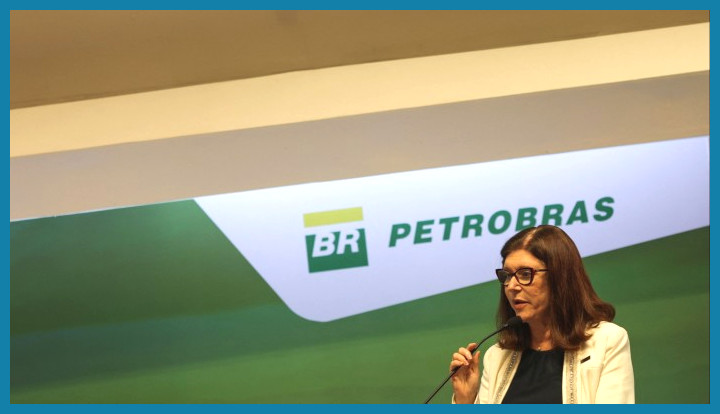
Petrobras, Brazil’s state-controlled oil company, is focusing on expansion to secure its long-term future. This ambitious approach comes as the company’s CEO, Magda Chambriard, emphasizes the need for the firm to diversify its operations to include activities like offshore drilling, biofuels, and fertilizers.
Chambriard is steering Petrobras in a new direction, moving away from the previous government strategies that mainly prioritized deepwater oil exploration. This initiative aligns with the goals of Brazil’s leftist President, Luiz Inácio Lula da Silva, who aims to enhance local job creation and stimulate economic growth.
Previously, Petrobras had trimmed its operations by selling off refineries, gas stations, and lands to alleviate debt. However, under the latest business plan, the company’s five-year capital spending budget has been increased by 9% to $111 billion. Chambriard argues this investment is essential for ensuring Petrobras’s survival and ensuring its role in Brazil’s energy future.
“We envision a Petrobras that is as large as possible and growing at a rate that matches Brazil’s development,” Chambriard stated in a recent interview, adding that the company will continue to expand in oil while also tapping into renewable energy sources.
The Brazilian government, which owns a significant stake in Petrobras, appointed Chambriard in May. She is continuing the shift initiated by her predecessor, Jean Paul Prates, who aimed to diversify the company in light of an evolving energy landscape but was ousted earlier this year. Oil and gas remain the central components of Petrobras, with exploration and production projected to absorb around 70% of capital expenditure through 2029. Nevertheless, investment in low-carbon initiatives has also risen significantly, indicating a commitment to sustainability.
Chambriard envisions a vertically integrated and diversified company that contributes positively to the energy transition. Having built her career in the energy sector, she believes that a broader approach will solidify Petrobras’s role in society and ensure its longevity.
She downplayed concerns regarding government intervention, reaffirming that she has secured Lula’s support for significant dividends planned for the next five years, balancing shareholder expectations with the need for investment in the company’s future.
With the oil market constantly evolving, the price of fuel remains a critical issue for investors. Chambriard assured that the government’s acceptance of recent price increases for petrol and cooking gas would not hinder Petrobras’s ability to fund essential investments.
Replenishing oil reserves is a priority for Petrobras, as forecasts indicate production will peak late in the decade before declining. The company aspires to boost its output significantly by 2028 to 3.2 million barrels of oil and gas equivalent per day.
Petrobras is also reinvesting in biofuels, particularly ethanol, produced from sugarcane in Brazil, and aims to collaborate with several partners in this field. Additionally, the company is restarting fertilizer plants in response to the government’s call for reduced reliance on imports, despite some skepticism regarding the returns on these investments.
Chambriard insists that neglecting to diversify and invest beyond oil and gas would be a path to decline but assures that new projects will be approached responsibly and profitably.