

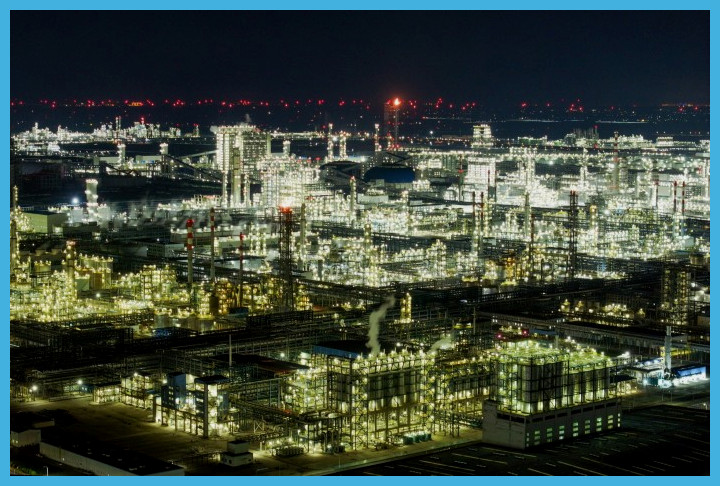
The largest merger in Europe this year highlights a crucial trend: the petrochemical sector is projected to lead oil demand growth in this decade. The Abu Dhabi National Oil Company (Adnoc), a key player in global crude oil, is acquiring the German firm Covestro for €15 billion. This move reflects Adnoc’s belief that the need for hydrocarbon-based plastics and foams will steadily increase as the world transitions to cleaner energy sources.
Khaled Salmeen, an executive director at Adnoc, shared insights on their long-term vision. “Looking ahead to 2050, we identified key growth areas,” he stated. “Gas will remain a critical energy source alongside chemicals, renewables, and low-carbon fuels. Thus, our strategy revolves around these four pillars.”
Despite facing tough trading conditions, the deal signifies the enduring significance of petrochemicals. Following the Covid pandemic, oversupply and diminished demand have caused significant price drops and led to the closure of older facilities.
“There has been a demand shock post-Covid, resulting in significant destocking throughout 2023,” explained Sebastian Satz, a chemicals analyst at Citi. “This period has been exceptionally challenging for management teams due to oversupply across nearly all product chains.”
Petrochemicals are integral to modern life, finding applications in clothing, packaging, toys, furniture, and more. For many oil producers, adding a petrochemical division enables them to capture more value from each barrel of oil while providing a buffer against declining oil use in transportation.
Current International Energy Agency (IEA) reports indicate that about 20% of the world’s oil consumption is linked to industrial and chemical uses, while 40% is dedicated to vehicles. However, this ratio is set to shift as electric vehicles become more prevalent. Projections suggest that by 2050, industrial and chemical sectors could consume 25% of global oil, compared to 35% for combustion-engine vehicles. In a more aggressive net-zero scenario, the industrial and chemical sectors may consume over six times more oil than road transport.
The production of chemicals does come with environmental consequences. Research from Lund University estimated that the petrochemical industry directly emitted 1.8 gigatonnes of carbon dioxide-equivalent in 2020, accounting for approximately 4% of global emissions. When considering upstream emissions, the total rises to about 10% of global emissions.
Moreover, plastic waste disposal has become a significant environmental concern.
International oil firms, such as Shell, stand among the largest petrochemical stakeholders. Meanwhile, Middle Eastern companies, traditionally focused on oil and gas, are escalating their involvement in the petrochemicals market. For instance, last year, Saudi Aramco purchased a 10% stake in China’s Rongsheng Petrochemical for $3.4 billion and is actively pursuing similar investments.
Amin Nasser, CEO of Saudi Aramco, recently noted that the company’s exploration for further investment opportunities in China is intensifying. The attention on renewable energy is expected to boost petrochemical demand, particularly for manufacturing solar panels.
As the leading global consumer of petrochemicals, China’s investments in domestic plant construction have resulted in a significant surplus, impacting prices negatively for European producers. Reports indicate that production in Europe fell by 8.3% last year.
Globally, capacity utilization of petrochemical plants hovers around 80%. Analyst Satz noted that tight markets and pricing power emerge when utilization exceeds the low 90s, with oversupply conditions expected to remain until at least 2027.
TotalEnergies’ CEO, Patrick Pouyanné, remarked on the current low-margin environment in chemicals, driven by increased Chinese capacities.
The surplus also poses challenges for recycled plastics and bioplastics, which are struggling to remain competitive amid cheaper prices. Although bioplastics, derived from plant materials, are gaining traction, they still represent a small fraction of the overall plastic market.
An anonymous chemicals research analyst highlighted the scalability issues confronting bioplastics production. “Competing with petrochemicals on a cost basis is tough due to the vast scale of petrochemical facilities,” they explained, noting that a single production plant can generate one million tonnes of product, a feat difficult for biochemistry to replicate efficiently.
In summary, while the petrochemical sector faces significant challenges from oversupply and environmental concerns, its relevance in the energy landscape is set to grow as demand continues to evolve.