

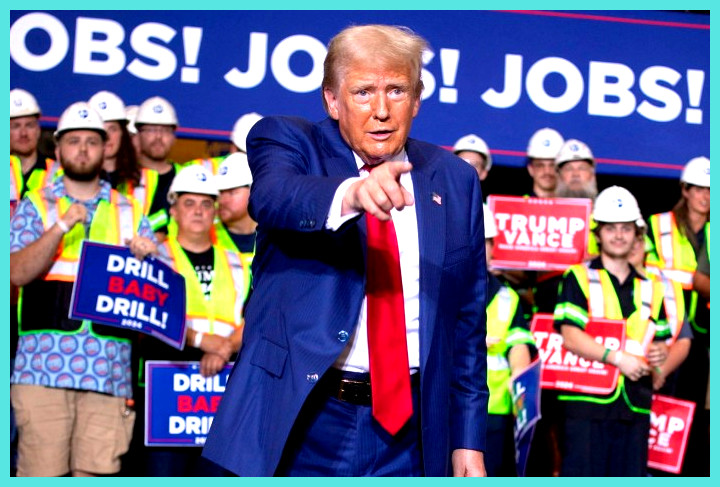
Donald Trump’s victory in the U.S. elections has raised concerns in the renewable energy sector. Following the results, several developers have paused their projects while investors have pulled back on renewable energy stocks.
One significant project on hold is a $150 million solar cell manufacturing plan by the Canadian company Heliene. They are waiting for clearer policies from the new Trump administration before moving forward. Similarly, Princeton NuEnergy, a start-up focused on battery recycling, is reconsidering its plans for a $300 million factory that was set to begin in 2028.
The renewable energy sector is bracing for challenges as Trump’s approach is expected to boost oil and gas production and roll back many of the current administration’s climate policies. This includes potential repeal of the Inflation Reduction Act, which has been crucial for promoting renewable energy.
Martin Pochtaruk, Heliene’s CEO, mentioned that many companies are holding back on investments due to uncertainty. The Solar Energy Manufacturers For America group highlighted that several projects are in limbo as stakeholders seek clarity.
Following Trump’s victory, the clean energy stocks have seen a significant decline, with the iShares Global Clean Energy ETF dropping 7%, while companies like First Solar and Vestas fell about 10%. Notably, shares of Plug Power and Sunnova plunged more than 25%, reflecting investor fears about a slowdown in the shift from fossil fuels.
Alan Alexander, a partner at a law firm involved in energy projects, remarked that many in the sector are now hesitating and developing contingency plans as they wait for more information from the new government.
The Inflation Reduction Act, enacted in 2022, previously turned the United States into a frontrunner in clean energy investments, influencing nearly $450 billion in private funding. However, Trump’s negative stance towards this act raises questions about future funding and support for renewables.
Trump has previously labeled the Inflation Reduction Act a “green new scam” and has stated his commitment to eliminating federal support for clean energy. His plans also involve imposing tariffs on imports, which could affect the cost of renewable energy components produced overseas.
Chao Yan, CEO of Princeton NuEnergy, pointed out that Trump’s proposed tariffs could increase production costs for renewable energy businesses, creating further uncertainty for domestic manufacturers.
Experts believe that if Trump’s policies take effect, they could lead to a decline in renewable energy deployment by as much as 30%. The potential rollback of tax credits and new tariffs on renewable energy equipment raises alarms about the future direction of the industry.
While Trump’s administration previously supported some clean energy incentives, analysts suggest that offshore wind projects and electric vehicles could face more significant hurdles under his leadership, given their reliance on federal approvals and their controversial status.
Despite these challenges, some executives express optimism. Eric Dresselhuys, head of a battery storage company, believes that the renewable energy market will persevere, regardless of the political climate.
Overall, the outlook for renewable energy under Trump’s administration remains uncertain, with many in the sector urging for clarity on future policies and investment strategies.