

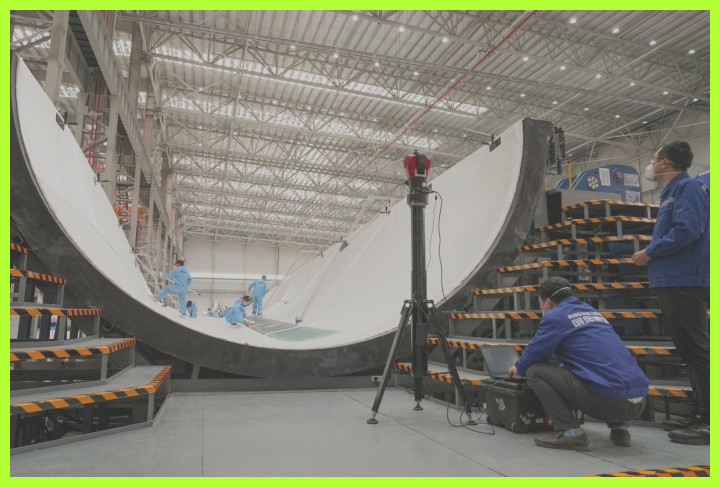
Scotland’s Deputy First Minister, Kate Forbes, has indicated that there is potential for the Chinese wind turbine manufacturer, Mingyang, to establish a factory in Scotland, as part of the country’s ambition to create more jobs in the renewable energy sector. Earlier this year, a proposed manufacturing site by Mingyang was prioritized through a collaborative initiative aimed at linking the supply chain with developers in Scotland.
However, this potential deal has raised concerns among some politicians, who worry about relying on a company from a country deemed “hostile” in terms of international relations, especially regarding critical aspects of the offshore wind industry.
Vestas, a Danish turbine manufacturer, is also moving forward with plans to build a wind turbine facility in Leith, Edinburgh, but has yet to finalize its investment. In an interview with Forbes, she expressed optimism saying, “I think there is room for both Mingyang and Vestas.” She emphasized the need for a significant transformation in Scotland’s supply chain to meet current industry ambitions.
Mingyang is negotiating a favorable supplier agreement to provide floating wind capacity aimed at reducing carbon emissions in the North Sea, in partnership with UK developer Cerulean Winds. However, no formal agreements have yet been secured, and concerns remain regarding the influence of Chinese ownership over business decisions.
The European Union Commission is investigating whether Chinese wind turbine manufacturers receive unfair subsidies from the Chinese government, as part of efforts to protect European industries.
Amid these developments, questions have emerged within the UK government about allowing Mingyang to invest in the UK. Conservative MP Nick Timothy raised concerns in the House of Commons regarding energy security tied to companies with links to potentially hostile states. UK Energy Minister Michael Shanks reassured that investment is encouraged but may involve processes already in place for due diligence.
UK Prime Minister Sir Keir Starmer, aiming to maintain a respectful diplomatic relationship with China, recently met with President Xi Jinping. In addition, Chancellor Rachel Reeves is set to visit China next year to further economic ties.
While the Scottish government oversees investment promotion, any factory agreement would need to comply with overarching UK security policies. Forbes mentioned the need for caution in the decision-making process while ensuring that Scotland benefits from its resources and job opportunities.
Despite investments aimed at bolstering Scotland’s manufacturing and service capabilities in offshore wind, some critics, including former SNP MP Stewart McDonald, argue that a comprehensive re-evaluation of partnerships with Chinese companies is necessary due to long-term risks associated with energy security and economic sustainability.