

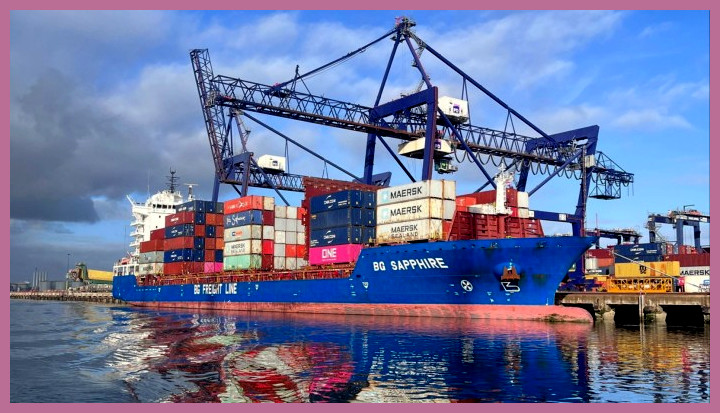
Last week, a morning boat trip around the River Tees revealed much about the past and future of the UK’s energy sector. Along the river, a Shell oil rig was being dismantled, while nearby, large wind turbine blades awaited transport to the North Sea. Across the water, a petrochemical refinery stood in sight of a biomass power station.
This area has also been the center of a dispute between the local port, which handles cargo, and a development zone that spans 4,500 acres around it. Earlier this year, a high court ruled in favor of the port regarding access rights.
During the boat tour, my guide, Jerry Hopkinson, who chairs PD Ports, the company that owns Teesport, shared his thoughts on the situation. Even after their victory in court, he was concerned about the need to defend their rights. “It’s incomprehensible that the largest private employer in the Tees Valley found itself in conflict with the local authority,” he remarked.
The opposing party in this conflict was the development corporation led by Lord Ben Houchen, the Conservative mayor of Tees Valley, and included two local developers, Chris Musgrave and Martin Corney, who have controversially taken charge of the Teesworks freeport in the area.
Hopkinson aims to look forward now. Teesport boasts a prime location, having been a part of the Tees since 1852, and generated 70% of its £214 million revenue last year from river conservation and leasing land to industries like the MGT Teesside biomass plant.
Maintaining the river is no easy task. PD Ports has recently launched a new green £23 million dredger to ensure the waterway remains navigable for large ships. Continuous dredging is necessary to remove sand and silt that accumulates from the North Sea.
The future of the port looks promising as Teesside attracts investments in clean energy. An oil and gas pipeline from the Ekofisk field in the North Sea runs into the area, with Houchen promoting Teesworks as “the UK’s leading decarbonisation cluster.” In April, prominent political figures, including Sir Keir Starmer, visited to support Labour’s green energy plans.
Despite being the sixth largest UK port by tonnage, Teesport often struggles with what it calls “southern discomfort,” as many goods for northern England arrive through busier ports like Felixstowe, which can accommodate larger container ships.
However, with the potential of net zero emissions and its position near North Sea wind farms, Hopkinson believes Teesport could become the largest port by volume within a decade, or possibly even sooner.
During our boat ride, he highlighted several projects aimed at enhancing the port’s capabilities. These include Seah, a South Korean company constructing a facility to create wind turbine foundations, as well as plans for carbon capture storage linked to a gas power station and hydrogen production plants by BP.
The port’s promising outlook may lead to a partial sale soon. Brookfield, the Canadian asset management group that has owned PD Ports since 2009, had attempted to sell it three years ago but halted the process due to legal issues. With those now resolved, Brookfield is considering selling a minority stake in the company.
Yet, there is still much that remains unfulfilled. The Teesworks site, once home to the Redcar steelworks, which fell apart in 2015, has been expensive to reclaim, and from the boat, we viewed stretches of barren land.
This backdrop creates a concerning tension as Teesside seeks to rejuvenate itself. Hopkinson emphasizes that the port should work collaboratively with nearby developments, whether on its land or not, as that is both a legal responsibility and a sound financial strategy.
With £560 million already invested publicly in the region, private sector funding is crucial for the energy transition. Without this cooperation, Teesside risks missing a major opportunity for renewal and growth.