

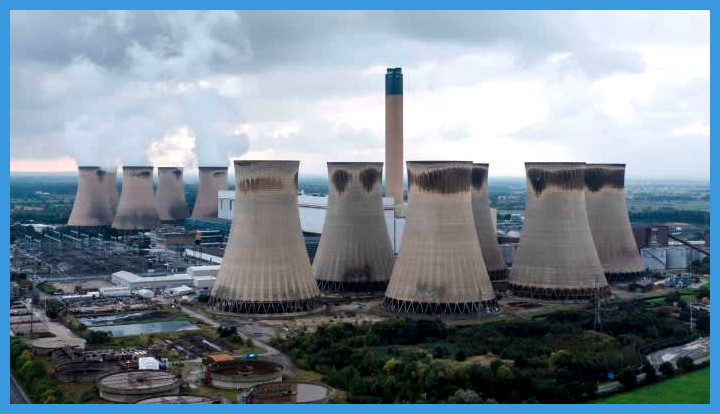
In a startling revelation, internal communications from Drax, the operator of the UK’s largest biomass power plant, suggest a troubling likelihood that the wood fueling its operations is sourced from ancient forest landscapes in Canada, areas recognized for their ecological significance. This troubling discovery emerges as the company grapples with its commitment to green energy amidst growing scrutiny concerning its environmental footprint.
Documents disclosed indicate that shipments received by Drax’s pellet mills from suppliers in British Columbia trace back to zones designated as ecologically valuable by local authorities. Alarmingly, some of these sources lie on what are categorized as “high-risk” private lands. While the procurement of this wood is not technically illegal, a chorus of environmental experts advocate for the protection of such old-growth forests, given their unparalleled ability to sequester atmospheric carbon for generations.
Drax plays a pivotal role in the UK’s energy landscape, contributing approximately 5% of the nation’s electricity through its Yorkshire facility, which has transitioned from coal to biomass. Last year alone, the company benefitted from nearly £1 billion in government subsidies, accounting for an estimated 13% of its staggering £7.5 billion in power generation revenue. As the clock ticks down on its current funding arrangement, Drax is actively pursuing additional taxpayer support.
In the wake of a protracted investigation led by Ofgem, the energy regulator, Drax emerged without allegations of deliberate wrongdoing. However, the company has agreed to contribute £25 million to a voluntary fund following findings that it failed to maintain adequate records regarding the imported wood between April 2021 and March 2022.
Delving into the internal discussions from November 2022, executives at Drax wrestled with how to categorize their wood sources, ultimately proclaiming: “Drax Canada does take material from forests that are native species that have not been previously harvested.” Yet, they caveated that this did not equate to a designation of “primary forest.” This convoluted reasoning reveals the complexities surrounding the sourcing narrative, as the correspondence highlighted a crucial disclaimer: the wood could be classified as “naturally regenerated forest,” a label now contested by investigators.
Whispers from those acquainted with the Ofgem probe suggest that Drax was unable to provide compelling proof to substantiate its claims. This scrutiny follows a BBC Panorama investigation that unearthed alarming details about Drax’s sourcing practices in Canada.
Karen Price, an independent ecologist deeply involved in conservation efforts in British Columbia, underscored the urgency of preserving these forests, stating, “These forests are at risk and they are critical to help us lessen the impact of the climate and biodiversity crises.”
In defense, Drax asserts that it treats the sustainability of its biomass sourcing with utmost seriousness, disputing any allegations of non-compliance and emphasizing its lack of ownership over the forests, harvest operations, or sawmills involved.
“Our internal conversations reflect a narrowly focused part of the extensive review process we conducted in response to Panorama and should be viewed within a broader context,” the company explained. KPMG, tasked with evaluating Drax’s regulatory reporting, found no evidence of misreporting in its 2023 annual findings; however, they have refrained from commenting further.
The internal emails reveal a grim reality: some of the wood used by Drax’s Canadian mills indeed originated from ancient woodlands, including those recommended for protection by an expert panel assembled by the BC government. Furthermore, some wood came from dubious “high-risk” private domains lacking traceability—raising alarms about the ethical implications of such sourcing practices.
In light of these developments, it has been deemed “highly likely” that wood from these at-risk old-growth areas has wound its way to both Drax’s power station and the Lynemouth facility in northern England, which generates enough energy to power around 450,000 homes, under the control of Czech entrepreneur Daniel Křetínský.
Yet, despite assurances of sustainability, troubling reports state that some pellets supplied by Drax to Lynemouth were flagged as “not sustainable” by the authorities—contrary to UK regulations demanding that at least 70% of biomass used be verified as sustainable. Lynemouth withheld comments on the matter.
Ofgem’s inquiry emphasized the technical nature of misreported data regarding wood characteristics but did not classify Drax’s biomass as fundamentally unsustainable. It did, however, mandate the company to redo its data submissions and undertake a comprehensive review of its reporting practices globally, a move that also prompted inquiries directed at other biomass power producers.
As the biomass industry champions responsibly sourced wood as a greener alternative to fossil fuels, a myriad of scientists, activists, and lawmakers voice growing anxieties regarding the sector’s potential to undermine the preservation of pristine and ancient forests.
Tegan Hansen, a senior forest campaigner at Stand.earth, poignantly captured the dissonance within biomass advocacy: “People who support biomass often say they are really concerned about climate change, but may be unaware of the harm caused by the sector.”