

In a World of Shrinking Refinery Margins: A Complex Picture of the Petroleum Landscape
Date: October 15, 2024
Source: Bloomberg L.P.
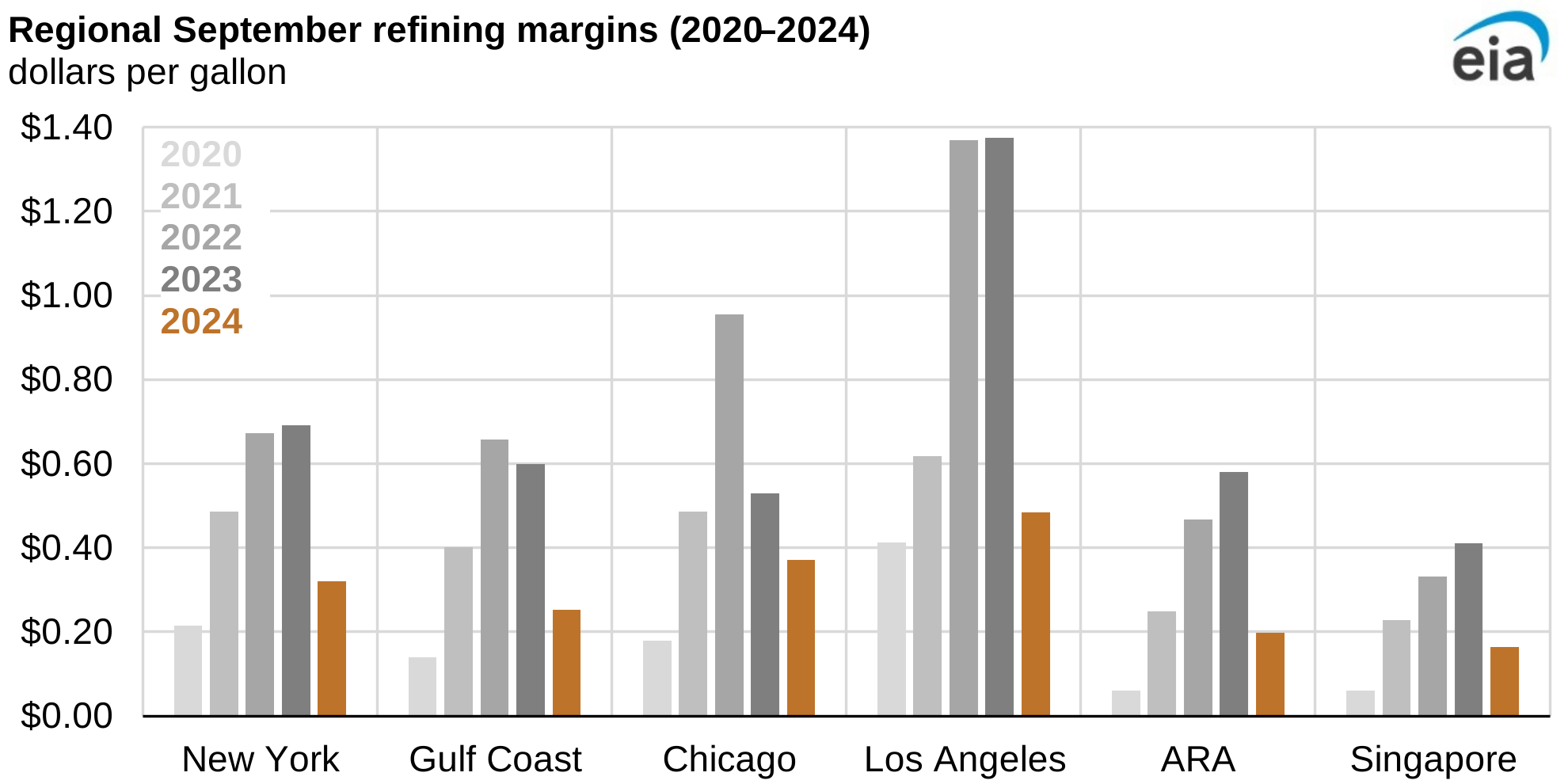
Note: The 3:2:1 crack spread, a crucial metric for gauging refining margins (the ephemeral profit window for oil refineries), denotes the usual conversion of crude oil into approximately two barrels of gasoline and one barrel of distillate fuel oil. This calculation employs varied regional crude benchmarks (Brent for New York, Los Angeles, and ARA; Light Louisiana Sweet for the U.S. Gulf Coast; West Texas Intermediate for Chicago; and Dubai for Singapore). Here, ARA refers to the Amsterdam-Rotterdam-Antwerp hub.
As the world turns its gaze toward the energy sector, a notable trend emerges: refinery margins are diminishing, whispering of hard times for crude oil processors. This decline signals a troubling erosion of profitability amid a landscape characterized by escalating refining capacities and a simultaneous dip in demand for petroleum goods.
Measured by the enigmatic 3:2:1 crack spread, global refinery margins have languished below their five-year averages since the spring of 2024, plummeting even further as summer bids farewell and autumn makes its entrance. This critical spread — derived from subtracting the cost of three barrels of crude oil from the combined value of two barrels of gasoline and a barrel of distillate fuel oil — reveals an unsettling trend. Recent figures unveiled a September monthly average margin that sank to the lowest point since 2020, a period marked by dramatically diminished transportation fuel requirements due to pandemic-induced travel restrictions.
In stark contrast to the previous two years, where margins were buoyed by soaring demand and a decline in U.S. refinery output post-2020 lows, today’s scenario paints a different picture. Particularly poignant was the West Coast experience, where refinery closures and shifts toward renewable diesel aimed to meet increasing demand have reshaped the operational fabric.
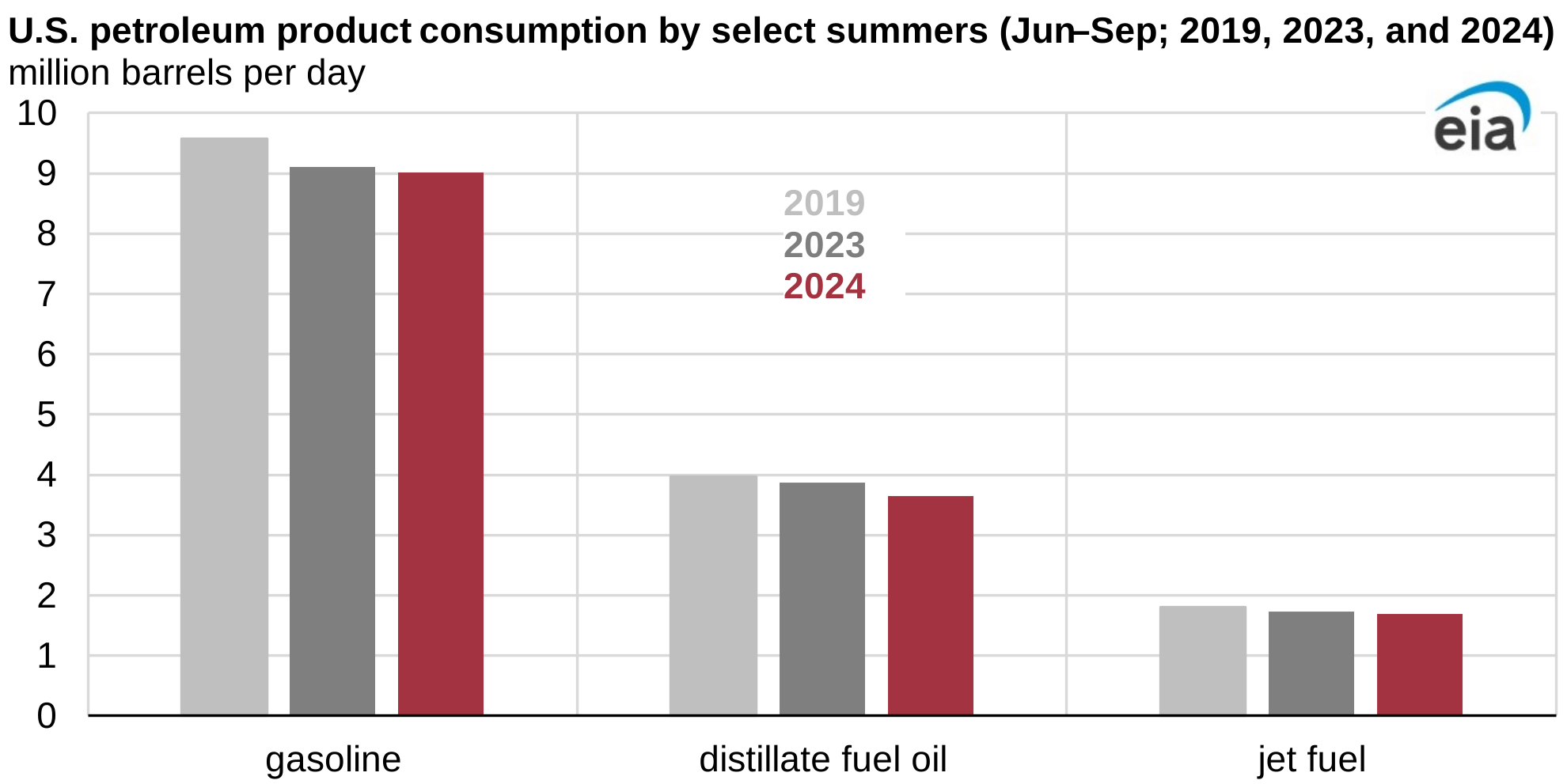
Yet, it is the muted appetite for petroleum products, especially distillate fuel oil, that emerges as a critical culprit in this narrative. In 2024, U.S. consumption of distillate fuel oil averaged a disheartening 6% below 2023 levels, and a significant 8% lower than pre-pandemic figures from 2019, a trend that can be largely attributed to faltering manufacturing activity and a rising tide of biofuel adoption, particularly in the eco-conscious setting of the West Coast. When we examine gasoline and jet fuel during the same timeframe, consumption barely nudged past the figures of 2023, remaining 6% shy of 2019 levels.
Shifting our gaze beyond U.S. borders, the demand for petroleum products appears similarly lackluster, hampered by stagnant economic growth in vital markets like China and Europe. The growing embrace of electric vehicles, biofuels, and liquefied natural gas within trucking operations continues to chip away at traditional petroleum consumption in much of Asia and Europe.
Moreover, a new wave of refining capacity establishing itself on the global stage is applying further pressure on the beleaguered margins. The Al-Zour refinery in Kuwait, boasting a capacity of 615,000 barrels per day, achieved full operational status in early 2024. Simultaneously, Oman’s Duqm refinery, with a capacity of 230,000 b/d, has officially come online, while Nigeria’s Dangote refinery, aiming for 650,000 b/d, steadily ramps up its refining activities.
In the face of this sobering reality, several global refiners have proactively adjusted their strategies. Many have curtailed refinery operations, while some European counterparts are contemplating either closure or capacity reductions. As part of this approach, LyondellBasell has announced plans to shutter its 264,000 b/d Houston refinery by early 2025 — a decision pre-dating the recent market pressures but indicative of the industry-wide recalibration.
Principal Contributor: Jimmy Troderman