

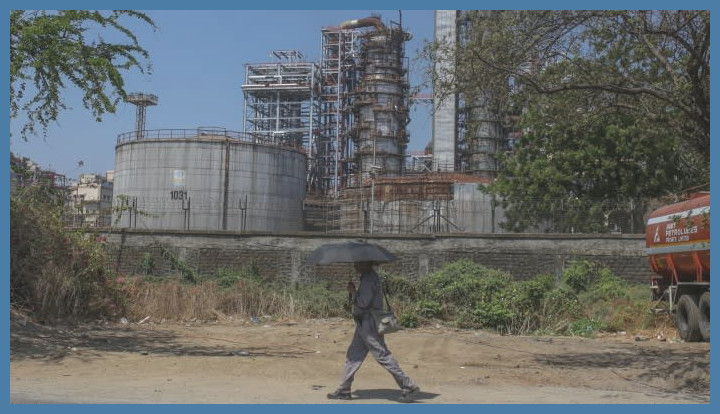
India is poised to undertake a sweeping overhaul of its oil regulations, a bold move aimed at enticing foreign oil giants to dive into both onshore and offshore exploration. The urgency behind this initiative, as articulated by the country’s oil and gas minister, Hardeep Singh Puri, is driven by a race against time to maximize crude extraction before the global energy landscape shifts irrevocably.
In an engaging dialogue at the Energy Transition Summit India held in Delhi, Puri recounted his recent high-stakes meetings with behemoths like Exxon, BP, and Chevron, even sharing insights from discussions with Petrobras in Brazil. “I urged them to join forces with Oil India to probe the bountiful yet untapped waters off the Andaman coast. Don’t worry about making any financial commitment upfront; just come and explore! We’re ready to roll out the red carpet. And should you strike oil, you’ll enjoy the first right of refusal,” he asserted, showcasing India’s aggressive approach to foreign partnerships.
The minister emphasized that India is sitting on a treasure trove of oilfields comparable in magnitude to ExxonMobil’s monumental 11 billion barrel discovery in Guyana. However, he cautioned that speed is of the essence: “The world is marching towards alternative energy sources—our window to capitalize on these resources is narrowing rapidly.” He delved into philosophical concerns, pondering the implications of unexploited reserves. “Sure, Guyana has a major discovery, but by the time they start producing, the energy transition might be well underway,” he noted.
Puri’s comments hint at a revitalized commitment from Prime Minister Narendra Modi’s administration to kickstart offshore oil exploration—a sector stymied in the past by oscillating regulations and endless bureaucracy. The disparity in estimates concerning India’s untapped oil riches is staggering; while S&P Global Commodity Insights posits that hidden beneath Indian soil could be as much as 22 billion barrels of oil, Rystad pegs this figure at nearly 8 billion.
Analysts from the International Energy Agency express skepticism regarding significant enhancements to India’s current output of 700,000 barrels per day. They point to a lack of compelling discoveries over the last two decades as a primary factor keeping international players at bay. Over that time, a meager 2 billion barrels were unearthed in India, a stark contrast to the booms experienced by Angola, Norway, and Brazil, where discoveries soared into the tens of billions.
“Given the prevailing climate of capital discipline, major oil firms are likely biding their time, waiting for a world-class discovery before dipping their toes in Indian waters,” the analysts concluded.
In a bid to rectify years of oversight, Puri has projected over $100 billion in investment opportunities by 2030, aspiring to alleviate India’s crippling reliance on imported oil which currently stands at a staggering 85 to 88 percent, costing the nation $150 billion annually. “We certainly took our eye off the ball—a lapse that must be rectified,” he remarked, revealing that a mere 10 percent of potentially lucrative oil basins have been actively investigated.
To catalyze oil exploration, he announced a radical shift in India’s legal framework. “We convened with industry leaders, asking them outright: ‘What changes do you need in our policies?’” Puri stated with conviction. “In the upcoming parliamentary session—fully scheduled for next month—I’ll ensure that our new proposal becomes law.”
This proposed legislation aims to radically rethink oilfield development regulations, offering protections against abrupt windfall taxes and granting foreign firms the right to arbitrate disputes outside Indian jurisdiction, among other pivotal reforms.
Additionally, Puri revealed that more than a million square kilometers previously designated as “no-go areas” due to military or other restrictions have now been opened for exploration. Furthermore, much-needed data has been centralized in a repository at the University of Texas in Houston.
Major players such as BP, Reliance, and Vedanta have already thrown their hats into the ring, bidding in India’s ninth licensing round for an array of onshore and offshore blocks, with 38 percent of those bids targeting areas that were once deemed off-limits.
Foreign oil executives recognize India’s burgeoning economy as a beacon for future crude demand. “India is blossoming and its growth trajectory looks incredibly promising,” remarked Darren Woods, CEO of ExxonMobil, during a recent earnings call. Puri echoed this sentiment, expressing confidence in India’s potential as a growth engine for the global oil market. He assured that a 10th licensing auction will swiftly follow the parliamentary approval of his legislative reforms, underscoring the urgency of India’s transformative ambitions.