

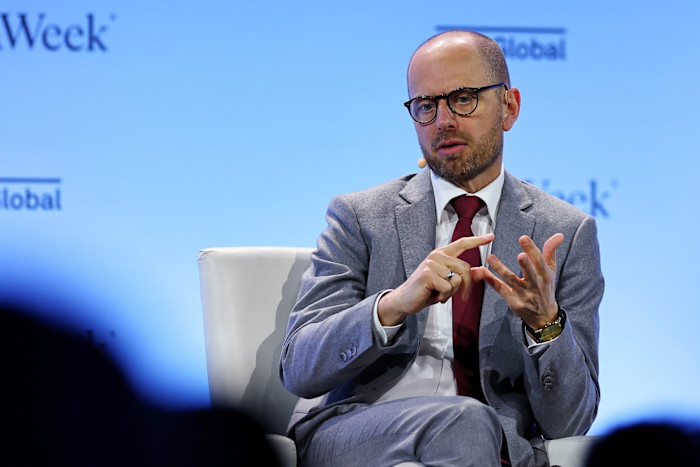
The CEO of Siemens Energy, Christian Bruch, recently urged the Trump administration to ensure more consistency in its policies. This call to action came as the German company announced a $1 billion investment aimed at expanding its operations in the United States.
In an interview, Bruch shared that this expansion is expected to create around 1,500 jobs, largely driven by the increasing demand for their products tied to the growth in AI data centers. While he recognizes the U.S. as a promising market due to the AI boom, he expressed concerns over certain policies from Trump’s administration that have negatively impacted Siemens, particularly delays in offshore wind projects.
Five major wind farms located off the East Coast, which were authorized and fully permitted, faced a standstill last December due to Trump administration orders that claimed the turbines might disrupt radar signals. Fortunately, federal courts have intervened, allowing these projects to move forward, with recent rulings in favor of resuming construction.
Siemens Energy, a major player in the energy sector, produces turbines and components for various wind developers, including companies from Denmark, Spain, and Norway. Bruch highlighted the complexities of installing large energy projects, stating that the nature of such installations requires long-term planning and stability.
He emphasized the need for predictability in tariff policies, which can be challenging amid rapid policy changes. Siemens Energy has been a long-term investor in the U.S., with about 12,000 employees across 25 sites. Their new investment will include a factory in Mississippi along with expansions in North Carolina, Alabama, New York, Texas, and Florida.
The company has bounced back following a significant €15 billion government aid package in late 2023, with shares recovering dramatically. Bruch is optimistic about future demand for electricity driven by AI, preferring to expand existing facilities rather than build completely new plants.
While acknowledging potential ups and downs in the AI sector, he remains confident that AI will be a significant part of the future and sees opportunities in the U.S. market, which continues to lure investment despite any policy uncertainties. Bruch participated in a recent informal event with Trump at the World Economic Forum, noting that geopolitical issues have become more complicated and require collective efforts from leaders.
In a time of division, he called for more collaborative action among political leaders, underlining the importance of unity in tackling global challenges.