

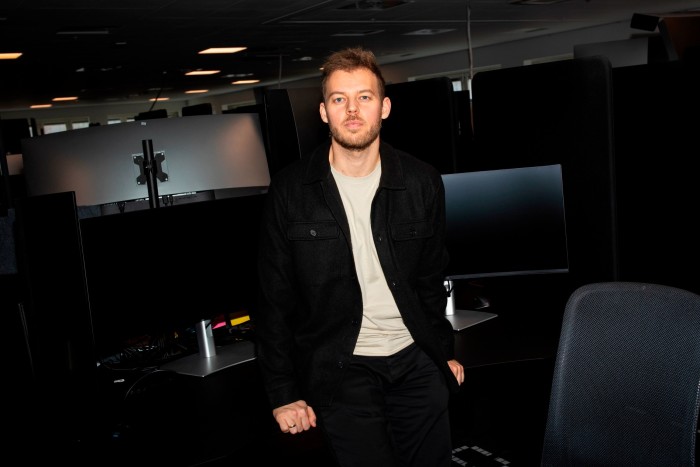
InCommodities, located in Aarhus, Denmark, showcases a vibrant new trend in Europe’s energy trading. The company, which includes backing from Goldman Sachs, features a bustling trading floor where young traders eagerly track numerous screens, seeking prime moments to trade electricity. Meanwhile, other team members are busy developing advanced algorithms designed to enhance trading efficiency beyond human capabilities.
This energy trading scene has emerged in response to a growing renewable energy market, where wind and solar energy generation is steadily replacing fossil fuels. The opportunity for high profits, intellectual stimulation, and a role in fostering a greener economy is attracting many young entrepreneurs to launch their own trading firms. This shift has created competition between newcomers and established companies like Equinor’s Danske Commodities, in a region that CEO Daniel Andersen refers to as the “Silicon Valley of energy trading.”
Andersen pointed out that the rise of renewable energy will boost demand for services offered by firms like InCommodities. He believes that trading plays a vital role in stabilizing the market, helping to mitigate the inherent volatility in energy distribution.
“It’s incredibly challenging and incredibly fun,” Andersen stated, emphasizing the motivation it brings to traders.
The volatility in markets is a result of various factors, including changes in weather and fluctuating demand. Even the smallest changes, like sunlight intensity on solar panels or wind conditions for turbines, can impact prices. This complexity has increased the importance of sophisticated trading algorithms, presenting opportunities for companies capable of creating and implementing them.
Andersen noted that as renewable energy generation increases, so too will the volume of data that traders must process.
“Understanding how to manage this surge in data is crucial,” he remarked.
Regulatory bodies have begun paying closer attention to the rise of automated trading. A recent report from the Netherlands Authority for Consumers and Markets highlighted potential risks associated with automated systems, including increased volatility and reduced transparency.
Iain McGowan, compliance head at InCommodities, acknowledged the need for a deeper understanding of algorithm interactions, stating, “As algorithms grow in number, the potential for unintended market actions increases.”
The transformation of Europe’s energy generation landscape is evident; renewable sources represented less than 10% of the energy mix two decades ago, while that number now exceeds 25%. In Germany, energy spot prices can swing wildly—from negative when there is excess power to over €600 per megawatt hour during periods of low wind and sun.
Mads Schmidt Christensen, strategy vice president at Danske Commodities, highlighted the extreme dedication required to balance and optimize renewable energy production. Traders must account for momentary influences such as cloud cover and wind patterns, and they are increasingly required to adapt strategies to unexpected market changes.
“Greater renewable shares will amplify the necessity for real-time balance in energy markets,” he added.
InCommodities was founded in 2017 with a strong belief that technology and algorithms were the future of the industry. Anderson explained that various external factors influence the energy market, such as geopolitical events, policy changes, and technological advancements.
With the drastic profit increases seen in 2022, following Russia’s invasion of Ukraine, InCommodities recorded €1.06 billion in post-tax profits, significantly up from the previous year’s €112 million. This surge in profitability inspired many new ventures, leading to the establishment of several competitors in Aarhus and Aalborg in 2023.
Several trends are shaping the market; for instance, smaller players are gaining financial ground to attract skilled staff, while hedge funds and banks are re-entering the trading arena. Automated trading is becoming more prevalent, with 70% of market volumes traded via these systems just a few years after it was only 44%. While some traders use existing platforms, others are pouring resources into custom software to bolster their competitiveness.
Automated trading’s share is expected to continue growing as traders find it challenging to compete with manual methods, and algorithms evolve to become more sophisticated. However, concerns remain about the potential for market manipulation due to rapid algorithmic trading, which can complicate regulatory oversight.
At InCommodities, McGowan emphasized their commitment to addressing these challenges responsibly as they grow. “We want to lead in best practices and recognize our responsibilities in the market,” he affirmed.