

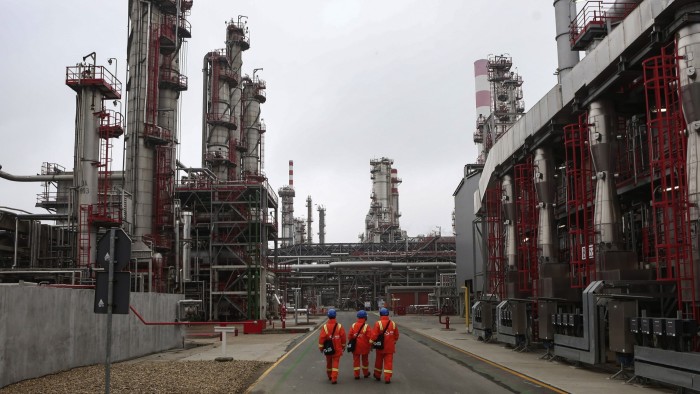
Serbia is facing the risk of losing its oil imports this Friday due to unsuccessful negotiations aimed at preventing US sanctions on the country’s only oil refinery, according to President Aleksandar Vučić.
The US Treasury has urged Russia’s Gazprom and its subsidiary, Gazprom Neft, to divest their majority ownership of the Serbian refinery NIS, among other holdings, as part of efforts to target Russia’s main revenue streams. The deadline for the Russian owners to sell their shares in NIS is set for Friday, and Vučić is doubtful that a last-minute agreement will materialize.
Most of Serbia’s crude oil is transported through a pipeline owned by Janaf from Croatia. If the pipeline stops operations with NIS, it would be in compliance with the new US restrictions.
“We’ve been in talks with the Americans, the Russians, and everyone else to find a solution,” Vučić stated. He expressed uncertainty about whether Janaf would continue oil transfers after the deadline and acknowledged that Serbia, with approximately 80 days’ worth of oil reserves, needs to reach an agreement.
Janaf has requested a 90-day waiver from the US to fulfill its contract with NIS and hopes for a favorable outcome.
Despite Serbia’s close ties with Russia, especially in light of the country’s refusal to impose sanctions against Moscow following the invasion of Ukraine, Vučić faces increasing pressure from domestic protests criticizing his government’s handling of corruption and other issues.
The Russian owners have resisted selling their combined 56% stake in NIS, although they have restructured their ownership to avoid holding a majority share.
Vučić has ruled out nationalizing NIS as a strategy to prevent the sanctions and has not disclosed his plans for addressing the situation. “Ultimately, we need a fully secured oil market in our country, ensuring a steady supply to our refinery and gasoline market,” he noted, emphasizing that resolving the issue would be straightforward if a deal on NIS’s ownership could be reached.
One potential solution mentioned by industry experts is for the Hungarian oil company MOL to acquire the Russian stake in NIS. However, Vučić stated this was not discussed during a recent call with Hungarian Prime Minister Viktor Orbán.
As tensions continue between Russia and the US concerning the war in Ukraine, Vučić believes that the NIS situation is minor in the broader context. He stated that if sanctions are enacted, both Serbia and Russia will need to respond accordingly.