

Donald Trump’s approach to tariffs and his efforts to lower energy prices are causing concerns among U.S. oil producers. Executives in the shale industry have expressed that these policies could negatively impact oil production, contradicting Trump’s “drill, baby, drill” strategy.
Trump has promised to promote American fossil fuel production and cheaper oil prices, suggesting that lower energy costs could help combat inflation for consumers. However, in a recent survey conducted by the Federal Reserve Bank of Dallas, shale companies indicated that Trump’s trade policies and ongoing unpredictability are creating significant challenges for their drilling operations.
One shale producer commented, “The administration’s chaos is a disaster for the commodity markets. ‘Drill, baby, drill’ has become more of a myth than a reality.” They emphasized the need for more predictable policies, expressing frustration over the unpredictability of tariff regulations.
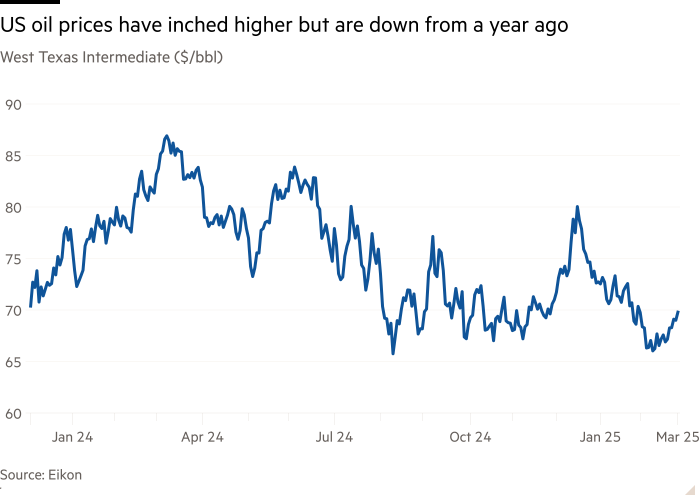
The survey, representing 130 companies, highlighted a rising sense of uncertainty in the industry, with many executives indicating that their business outlook has declined since late last year. Executives pointed out that a further drop in oil prices, currently around $70 a barrel, could severely hurt their operations. The shale industry relies on steady investments to maintain production levels, as their wells deplete quickly.
Analysts suggest that the sentiments expressed in the Dallas Fed survey reflect broader skepticism towards Trump’s oil agenda. Hunter Kornfeind from Rapidan Energy Group noted that current uncertainty is hampering producers’ ability to plan for the future, which could lead to a slowdown in production activity.
There are reports that Trump’s trade advisor suggested that lower oil prices could help manage inflation, while the U.S. Energy Secretary stated that shale production could see an uptick at such price points. However, producers are cautious, and one respondent in the survey indicated that they are reducing their capital expenditures due to fears that ongoing tariff policies could adversely affect their operations.
The Dallas Fed report revealed that oil companies generally need prices of at least $65 per barrel to remain profitable, indicating how sensitive their businesses are to price fluctuations.
Even as Trump has garnered financial support from the oil and gas sector in previous elections, the mood among shale executives appears to have shifted as they grapple with increased costs from tariffs on critical materials like steel and aluminum. One long-time producer expressed, “I have never felt more uncertainty about our business in my entire 40-plus-year career.”
This growing unease among oil industry leaders reflects a pivotal moment where the administration’s policies are colliding with the fundamental economic realities of oil production.