

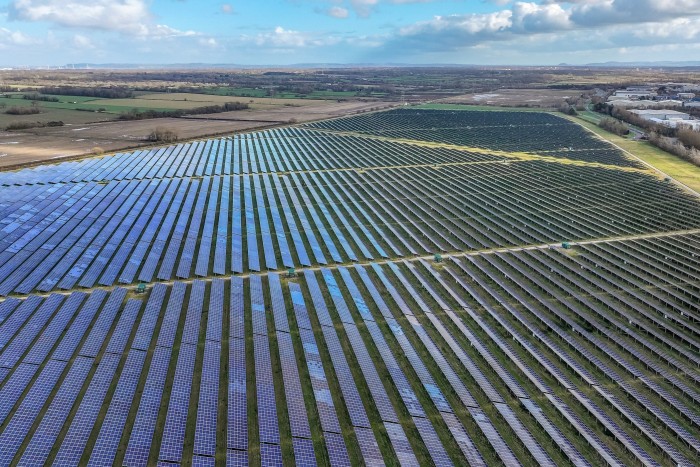
Wind and solar farms are increasingly facing energy waste due to insufficient infrastructure to transport or store electricity when it’s not in high demand. Last year alone, nearly 10% of the intended wind energy in Britain was left unused, while the figure was almost 30% in Northern Ireland. This information comes from an analysis by Aurora Energy Research.
Germany experienced a 5% reduction in renewable output, while in France, about 2.5% of solar energy production faced similar restrictions during summer months. This wastage stems from a rapid increase in wind and solar generation facilities, which has not been matched by a sufficient expansion of electricity transport systems or storage solutions, such as batteries and hydropower.
As a consequence, electricity prices have become more unstable. For instance, there have been instances where electricity prices dropped to negative levels during particularly sunny or windy days, prompting energy producers to pay users to take excess electricity.
Kristian Ruby, the secretary-general of Eurelectric, emphasized the need to address the lack of reliable power supply. Last year marked a record of sub-zero prices across various European locations, with Great Britain accounting for 176 hours in this scenario.
While the renewable sources of wind and solar are essentially free, the resulting price fluctuations and energy wastage can burden both developers and consumers, missing opportunities to save power for times of need.
China, which has been rapidly increasing its solar panel installations, is also facing curtailment challenges. Recent data shows that about 3% of planned wind energy and 3.2% of solar energy were left unutilized in China last year.
The total wasted renewable energy was substantial, amounting to 58.7 terawatt-hours, which could have powered 24 million households. Both Europe and Britain have actively progressed in installing renewable energy sources, surpassing fossil fuels in electricity generation for the first time in 2024.
However, the variability of energy supply creates challenges in meeting demand consistently. Many regions lack the necessary infrastructure to transport power from renewable sources situated in less populated areas to urban centers where demand is high. Consequently, during periods of excess production, generators often choose to turn off their systems to avoid losses.
The UK’s National Energy System Operator has reported that balancing actions to manage these discrepancies have cost electricity consumers roughly £4 per month, which is expected to rise. Most of the wind energy lost occurred in Scotland, where there’s limited capacity to transport that energy to where it’s needed.
Addressing these challenges involves significant investments in energy infrastructure and storage technologies. In the previous year, investors committed $54 billion to energy storage and $390 billion to electricity grids. New cables are being installed to enhance energy flow between regions, and estimates suggest that battery storage capacity in Europe could increase significantly in the coming years.
The UK government is also exploring restructuring the national electricity market into specific geographical areas to reflect local supply and demand more efficiently. Such measures aim to encourage the use of green energy during optimal generation periods.
Consumers and businesses are encouraged to adjust their electricity usage patterns, such as charging electric vehicles during off-peak times. Although some energy curtailment can be economical, experts note that the issue of energy waste may linger for years until better storage capabilities and grid reinforcement are developed.