

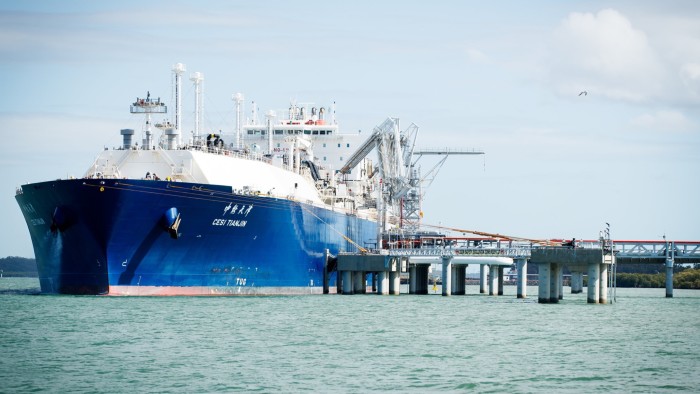
According to Shell, global demand for liquefied natural gas (LNG) is expected to rise by 60% by 2040. This surge is driven by faster economic growth in Asia and the global push to reduce carbon emissions in various industries.
In its latest annual report on LNG, Shell has revised its forecast, increasing it by 10 percentage points from last year, mainly due to greater demand anticipated from India and China. The company emphasizes that the expansion in global LNG trade will be propelled by economic growth in Asia, the need for cleaner energy alternatives in heavy industries, as well as the expanding tech sector that consumes a lot of energy.
As the top LNG trader in the world, Shell handles around 60 million tonnes of LNG annually. The company compiles its forecasts by analyzing data from multiple energy consulting firms.
China, which is the largest importer of LNG globally, is set to enhance its capacity significantly, aiming to provide piped natural gas to 150 million people by 2030. India is also stepping up its efforts in this area, planning to connect 30 million people over the next five years.
The significance of LNG has surged since the Russian invasion of Ukraine in 2022, prompting European nations to import more LNG to replace the dwindling supplies of Russian gas. This has led to increased competition with Asian nations for scarce shipments of LNG.
Shell projects that Europe will continue to rely on LNG through the 2030s to supplement the growing share of renewable energy sources and ensure energy security while pursuing net-zero targets. Natural gas serves as a vital backup during periods of low renewable generation, and it is often more cost-effective than battery storage, according to Cederic Cremers, Shell’s executive vice president for LNG.
European countries, particularly Germany, have invested significantly in LNG import infrastructures during the energy crisis that arose from the conflict in Ukraine. These infrastructures can be adapted for importing bio-LNG or synthetic LNG and even reconfigured for green hydrogen imports in the future.
While Shell and other companies promote natural gas and LNG as a cleaner alternative to coal, it’s important to recognize that burning natural gas still produces considerable carbon emissions. Additionally, LNG trading has faced scrutiny over its environmental impact.
Looking ahead, Shell predicts that global LNG demand will grow to between 630 million and 718 million tonnes by 2040, up from 407 million tonnes last year. The previous forecast estimated demand at 625 million to 685 million tonnes. The company expects that over 170 million tonnes of new LNG supply will come online by 2030 to meet this rising demand, with a significant portion of this new supply anticipated to originate from the U.S., although future growth may encounter challenges such as regulatory hurdles and rising construction costs.