

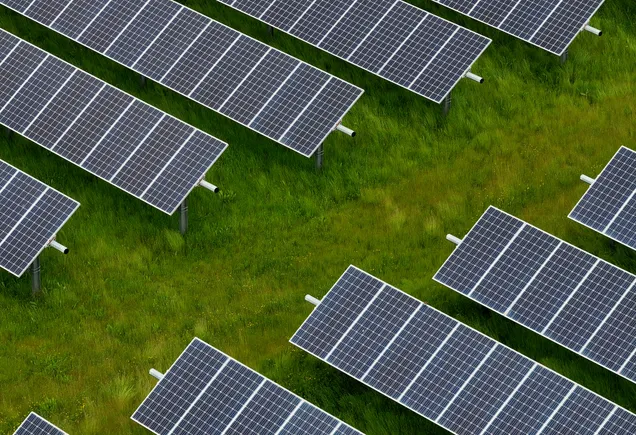
The Energy Information Administration (EIA) forecasts that in 2025, around 63 gigawatts (GW) of utility-scale generation capacity will be introduced, with a significant portion—approximately 81%—coming from solar energy and battery storage. This information was shared in a report released on Monday.
This new capacity represents nearly a 30% increase compared to 2024, during which 48.6 GW was added. According to the EIA, this was the highest installation of capacity in a single year since 2002. Solar energy is expected to contribute over half of the new capacity in 2025.
In 2024 alone, power producers added a record 30 GW of utility-scale solar, making up 61% of the total capacity additions during that year. The EIA anticipates this trend to continue, predicting an additional 32.5 GW of utility-scale solar capacity will be installed in 2025. Texas and California are expected to lead this growth, contributing nearly half of the new solar capacity.
However, the current landscape for renewable energy is somewhat uncertain, particularly with political changes. As President Trump begins his second term, there are concerns over funding for clean energy projects due to potential freezes on financial support from the Inflation Reduction Act, which could impact the development costs for wind and solar energy.
In 2024, interest in solar and battery storage investments decreased, primarily due to uncertainties surrounding renewable energy policies under the Trump administration. Despite this, power providers managed to add 10.3 GW of new battery storage capacity in 2024, and EIA projects this could nearly double, reaching an estimated 18.2 GW in 2025.
The remaining anticipated capacity addition for 2025 includes 4.4 GW of natural gas and 7.7 GW of wind energy. Notably, 2024 saw only 5.1 GW of wind capacity added, marking the lowest increase in wind installations since 2014.
Texas, Wyoming, and Massachusetts are expected to contribute about half of the new wind capacity in 2025. Furthermore, two major offshore wind projects are expected to come online this year: the Vineyard Wind 1 with a capacity of 800 megawatts in Massachusetts and the Revolution Wind with a capacity of 715 megawatts in Rhode Island.