

What can be considered the worst acquisition in business history? Numerous examples come to mind, including the disastrous merger of AOL and Time Warner in 2000, and the Royal Bank of Scotland’s £49 billion purchase of ABN Amro in 2007.
However, there are also smaller acquisitions that serve as meaningful lessons about the risks involved in company transformation. Take, for instance, Wood Group’s £2.2 billion takeover of Amec Foster Wheeler in 2017.
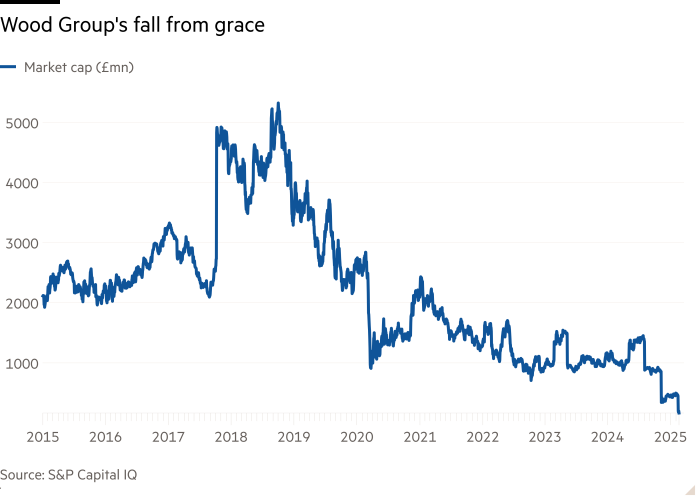
Wood Group, based in Aberdeen, built its reputation by winning engineering contracts in the oil and gas sector. At its height, the company’s market capitalization exceeded £5.3 billion. Today, things look very different. Wood Group has seen its market value plunge to just £167 million and is burdened with a staggering net debt estimated to average around $1.1 billion this year. The company is in the red and is approaching the expiration of $1.4 billion in debt facilities next October. Recently, Wood faced embarrassment when its chief financial officer resigned after admitting to misrepresenting his qualifications.
A significant part of Wood’s problems trace back to the Amec acquisition. At that time, the energy services sector was just beginning to recover from the oil price crash of 2014. Wood, heavily reliant on oil and gas—accounting for 85% of its revenue—saw an opportunity to acquire a more diverse competitor in Amec, which operated in various sectors including environmental and infrastructure projects.
Historically, Wood preferred smaller acquisitions but decided to make a giant leap. This decision resulted in massive debt, with liabilities skyrocketing from $323 million in 2016 to $1.6 billion the following year. Additionally, the deal introduced legal obligations that worsened Wood’s financial standing.
The company also faced other struggles along the way. In response to rising inflation, Wood altered its business model in 2022, moving away from fixed-rate contracts to more flexible agreements that allowed for cost recovery. However, this shift has adversely affected revenues and created challenges related to exiting old contracts. An independent review launched last year highlighted significant weaknesses in Wood’s financial and governance practices.
Adding to its challenges, Wood has encountered rejection from potential buyers. In a recent attempt to find a suitor, a bid from Apollo in May 2023 fell through despite valuing Wood at over £2.2 billion, including debt.
Almost a decade after the ambitious acquisition of Amec, the focus on diversification has shifted away, and Wood Group’s best hope for recovery might be to attract interest from another bidder, albeit at a significantly reduced price.