

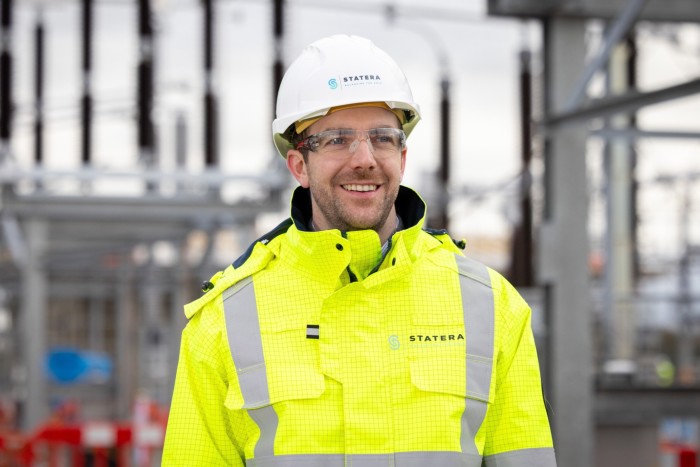
In a marshy area near Tilbury Fort in southeast England, Nick Mallinson, an engineer, is inspecting a new battery storage site that is set to launch in March. This site is crucial for helping the UK achieve its energy goals, especially as demand for equipment like transformers and electrical components continues to surge.
Mallinson, who oversees the Statera Energy storage facility, explained that the project will have the capability to store electricity for around 700,000 London households, ready to supply energy within seconds. However, there have been significant delays in acquiring the necessary transformers, which took 16 months to arrive from China after being ordered from Siemens Energy.
The slow supply of key electrical equipment poses a risk to the UK’s plans for reducing carbon emissions by 2030. The National Energy System Operator has stated that achieving this target will require an unprecedented increase in energy infrastructure, but warns that supply chains might not keep pace, leading to higher energy costs for consumers and businesses.
UK Energy Minister Lord Philip Hunt revealed last month that some high-voltage equipment is facing lead times of up to four years. Experts like Rob Gilbert from Baringa consulting highlighted that growing demand has caused significant waits for transformers, which have doubled or tripled in lead time over the last ten years.
A senior analyst at Wood Mackenzie, Benjamin Boucher, mentioned that prices for transformers have increased by 40% to 60% in the last three years. For instance, a valuable transformer needed for power projects now costs nearly $3 million, up from $2 million.
The news isn’t entirely bleak, as manufacturers are attempting to respond to rising demand. Companies like GE Vernova and Hitachi Energy are expanding operations and investing heavily in transformer production capacity. Despite the growth, there remains some caution in the industry concerning overinvesting.
The Electric Storage Network has raised concerns about the limited number of companies available to build and maintain battery sites, emphasizing the need for a more robust workforce and manufacturing capabilities in the UK.
As industry experts express that the shortage of transformers is just one part of a larger problem—other electrical components are also facing significant lead times—the need for urgent government action has become clear. Key figures are urging new factories and a trained workforce to support the UK’s electrification plans and ensure they remain on track for ambitious clean energy targets.
Amid these challenges, some developers note that while transformer delays are significant, other areas such as wind turbines and floating foundations are seeing even longer wait times. As they navigate this complex landscape, energy developers continue to adapt to the pressures of supply chain constraints, hoping to find solutions that enable progress in the energy transition.