

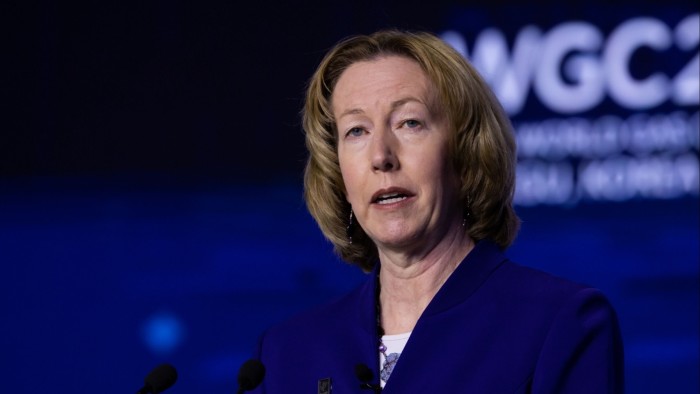
Australia is facing serious challenges in maintaining its status as a leading global supplier of energy, according to the CEO of Woodside Energy, the country’s largest oil and gas company. Meg O’Neill spoke at the Melbourne Mining Club and highlighted how competition from the U.S. under Donald Trump, who is focused on boosting fossil fuel production, puts Australia at a disadvantage.
O’Neill stated that Australia struggles due to higher taxes, labor costs, and strict environmental regulations compared to its U.S. counterpart. She emphasized that certain state governments seem ideologically opposed to developing new oil and gas projects, which is delaying necessary installations to secure Australia’s energy supply.
She noted, “Australian companies of the future will need reliable, affordable energy,” stressing the importance of energy security for the nation’s prosperity. O’Neill also mentioned that the country could face significant policy failures if it fails to take advantage of its rich natural resources.
With a national election on the horizon, O’Neill expects energy issues to be a central topic, especially given the rising costs of living. Consumers in Australia are already feeling the pinch from increasing electricity prices, prompting government interventions, such as subsidies. However, she warned that energy prices are likely to rise further due to diminishing domestic supply, forcing some states to import gas.
Woodside, valued at approximately A$47 billion (US$29.5 billion), has become a dominant player in Australia’s oil and gas industry after merging with BHP’s energy assets in 2022. The company produces liquefied natural gas (LNG), which ranks as Australia’s second most lucrative export after iron ore and coal. Australia, along with the U.S. and Qatar, is a major global LNG supplier, accounting for about 20% of the worldwide trade in gas, primarily exporting to Asian nations like Japan and South Korea.
O’Neill raised concerns that Australia’s image as a trusted energy supplier in Asia is at risk due to the current government’s interventionist policies, such as price caps and export controls designed to ensure domestic supply. Meanwhile, Trump’s administration is aiming to roll back previous green energy initiatives and increase LNG exports.
Since 2021, Woodside has also been making strides internationally, including significant acquisitions in the U.S. O’Neill pointed out that a major reason for this expansion is the faster project approval processes in other markets compared to Australia. She also expressed frustration with the lengthy delay in advancing a project in Western Australia, which is still waiting for final government approval six years after its initial proposal.