

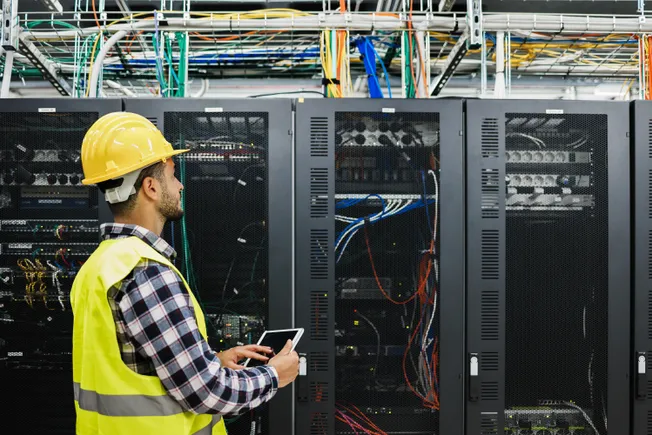
According to recent studies, data centers could drive up to 44% of the electricity load growth in the U.S. by 2028. By 2030, they may consume as much as 9% of the nation’s total power supply. This trend raises significant concerns about energy availability and pricing across the country. Notably, about 40% of the electricity used in data centers is dedicated to cooling, making cooling efficiency crucial for reducing overall energy consumption. The importance of effective cooling solutions also impacts how these facilities are designed and constructed.
In the latter half of 2024, several key developments emerged regarding cooling systems tailored for data centers, especially those which support powerful artificial intelligence (AI) processes. Major firms like Microsoft and Schneider Electric unveiled high-efficiency liquid cooling designs meant to better support next-gen AI chips. Microsoft’s closed-loop, water-based cooling system eliminates water waste through evaporation, while Schneider Electric’s approach utilizes non-water refrigerants. Earlier in 2024, Vertiv and Compass Datacenters introduced a hybrid liquid-air cooling system expected to be deployed soon.
Looking ahead to 2025, experts anticipate that two-phase liquid cooling systems will gain traction among data center operators. These advanced systems leverage a liquid-to-vapor transition to optimize heat removal, and many believe this technology will be crucial as data center demands increase. A report indicated that 35% of data center professionals are unhappy with current cooling setups, with many expressing a need for scalable solutions to enhance performance.
Two-phase Cooling Systems Expected to Emerge
As technology advances, more operators are expected to adopt two-phase, direct-to-chip cooling technology for enhanced performance. This method significantly improves cooling in conditions where traditional air cooling falters, particularly for high-density server setups. Experts suggest that 2025 may see wider implementation of these systems as data center professionals grow more familiar with the technology.
“Almost no new data center builds will be exclusively air-cooled or liquid-cooled, as different applications will call for different solutions.”

Sarah Renaud
Vice President, Consulting Services, ENCOR Advisors
Renaud noted that conventional air cooling struggles at higher performance levels—reaching a ceiling around 70 kilowatts for AI training setups. As data requirements surge, two-phase systems will be vital, effectively managing increased heat generated by dense hardware configurations.
Hybrid Cooling Solutions Are Evolving
Two-phase immersion cooling presents cost-effective alternatives compared to other methods. However, upfront investments and the longevity of existing systems mean that hybrid solutions combining air and liquid cooling will likely remain popular for some time. Renaud highlighted that not all data center operations require elaborate liquid cooling; simpler air systems can serve less demanding needs.
Looking at the potential for growth in hybrid cooling, Microsoft’s innovative water-based cooling aligns well with future technologies, readying their infrastructure for adaptive cooling solutions that are expected to emerge. Nevertheless, anticipated tariffs could complicate supply chains for essential components for cooling systems, risking delays for operators keen on meeting rising demands.
Building Designs for Continuous Operation
State-of-the-art data centers are expected to perform significantly better than their predecessors, requiring designs that accommodate nearly constant operation due to AI workloads. As AI models demand extensive computing capacity, the cooling systems must be robust and dependable. Higher rack densities and cooling requirements are leading to innovative building strategies, including heavy-duty infrastructure to support powerful cooling systems.
Experts predict that retrofitting current data centers, while challenging, will provide a practical path to boost performance without building entirely new facilities. As older setups often hold considerable value in their existing power supplies and infrastructure, retrofits that enhance liquid cooling will be an attractive option for operators looking to modernize.
Cool Climate Locations May Have a Competitive Advantage
With many new data centers being established in cooler climates, operators are finding that these locations offer significant advantages in cooling efficiency. Areas with naturally lower temperatures can drastically reduce reliance on energy-intensive air cooling systems and are less likely to be impacted by water shortage concerns associated with traditional cooling methods.
The trends in data center cooling highlight an interconnected response to growing demands for energy efficiency and technological advancement. As industry leaders continue to innovate, the landscape is expected to evolve, embracing diverse cooling strategies tailored to future needs.