

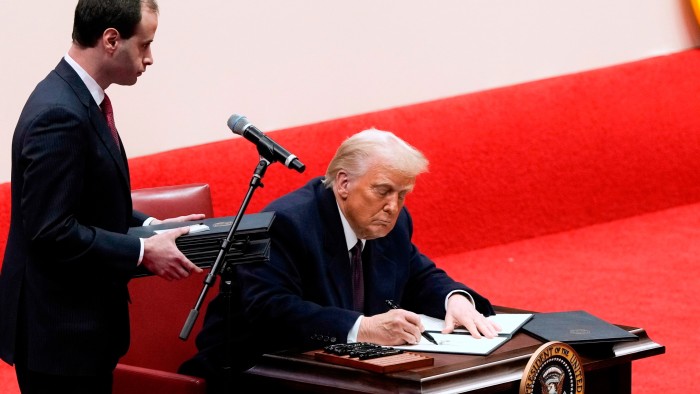
In 2017, Elon Musk expressed his disappointment when former President Donald Trump decided to pull the United States out of the Paris Agreement on climate change. Musk wasn’t alone; several renowned CEOs, like Tim Cook from Apple and Sundar Pichai from Google, also voiced their concerns. Fast forward to this week, as Trump reinstated the US’s withdrawal from the Paris accord on the first day of his new term, the reactions from these corporate leaders have drastically changed, showcasing a shift in corporate attitudes towards environmental policies.
Trump’s decision to leave the Paris Agreement signifies a broader strategy affecting climate policy in the US. His recent executive orders not only reaffirmed the exit but also proposed a ban on new wind farm approvals, which raises questions regarding the rationale behind such moves, especially if energy security is genuinely the main goal. By declaring a “national energy emergency,” Trump appears to frame fossil fuel reliance as part of a conservative agenda while viewing renewable energy as aligned with progressive ideals.
Among his 26 executive orders, several targeted energy and climate issues, clearly positioning them at the forefront of his administration’s agenda. The suspension of new wind projects has sent ripples through the energy sector, impacting companies heavily involved in wind energy. Following the announcement, shares for major firms like Vestas and Ørsted plunged, indicating investor uncertainty regarding the future of renewable energy in the US.
Interestingly, Trump’s focus on the environmental impact of wind projects contrasts sharply with his push for oil and gas drilling in sensitive areas like the Alaska National Wildlife Refuge, raising concerns about selective environmentalism. While some may remain hopeful about the green energy sector, evidence from Trump’s first term suggests a more complicated relationship with renewable energy investments. Despite some growth in this sector during his previous administration, there are signs his current approach is less supportive.
In a significant blow to renewable energy funding, Trump’s order to halt grants and loans under the Inflation Reduction Act puts over $300 billion in potential federal support at risk. Many of these green investments have garnered bipartisan appeal, especially in Republican districts, where local leaders have urged the continued support of such initiatives for job creation in their communities.
Trump’s positioning on energy policy reveals conflicting priorities: While promoting fossil fuels may solidify his support among certain voter groups and industry donors, fostering green investments could bolster national economic security and job creation. As his second term unfolds, it remains to be seen which direction he will lean towards.
In summary, with the recent executive orders, Trump is setting a controversial course regarding energy policy that is likely to have lasting implications for clean energy investments and the future of the climate agenda in the United States.